How to identify acrylic material

Signed-In Members Don't See This Ad

mrhulot

Member
Joined
May 30, 2025
Messages
7
Location
philadelphia
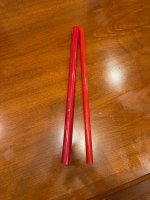
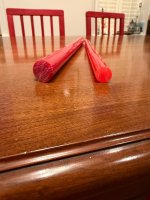
I stopped by my local creative re-use place and picked these rods up. They look to be some kind of plastic but they were of course unlabeled. How would one go about figuring out what they are? I'm more concerned about the safety of turning them than knowing the exact chemical composition.
 

Attachments

  • IMG_0560.jpeg
    IMG_0560.jpeg
    637.5 KB · Views: 29
  • IMG_0559.jpeg
    IMG_0559.jpeg
    497.9 KB · Views: 31
Signed-In Members Don't See This Ad
From the point of view of safety, a good default assumption is "never sand without a mask" (that goes for wood too - wood dust can be as dangerous as plastic dust, even the species that are generally considered food safe).

I know how to identify some vintage materials by a tiny rub with sandpaper based on the smell - celluloid (true celluloid, that is cellulose nitrate) smells like camphor (mothballs). Celluloid acetate often smells like acetic acid (vinegar). Galalith (a.k.a. casein) smells like hot milk.

The modern materials I normally classify as "can thread (for kitless pens) easily" or "let somebody else have the headache." I can usually guess based on feel if a rod is polyester resin versus urethane resin versus acrylic acetate - but don't know a foolproof way to distinguish them.

 
How about the smell of turned or sanded walnut? Duncan has a unique method but does that dictate how it is to be turned?
I can recognize walnut but I haven't got a good description of the smell. Same with cherry and a bunch of exotics (such as lignum vitae and the Dalbergias - cocobolo, kingwood, African blackwood, Honduras rosewood).

Turning plastics isn't complicated, you just have to avoid heat. I find I have to turn them slower and with less pressure on the tool to avoid melting. There's also a risk of chipping, some are more prone to this than others (thinking of polyester and acrylester). I pretty much gave up on them, because I couldn't find a way to make threads that didn't crumble.
 
Back
Top Bottom