Cocobolo

Signed-In Members Don't See This Ad

Ehunt

Member
Joined
Dec 10, 2012
Messages
30
Location
Palm City FL
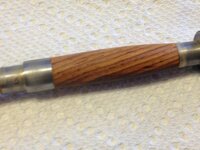
I purchased a 10 pack of cocobolo from PSI, all of the blanks have a dark exterior as if something was applied to them that has soaked into the wood. The centers of the blanks are much lighter in color. One of the blanks didn't drill straight so one side of the pen has a dark streak down the side where the drill went too close to the "stained" wood. Is this something natural in cocobolo? Or has something been added to the blank to darken the exterior?
 
Signed-In Members Don't See This Ad
Took a couple pics with my phone, maybe someone can verify this is a normal appearance. Also note that excess CA when gluing the tubes came off with an orange tint picked up from the wood.
 

Attachments

  • cocobolo1.jpg
    cocobolo1.jpg
    51.6 KB · Views: 233
  • cocobolo2.jpg
    cocobolo2.jpg
    48.1 KB · Views: 247
That is normal for cocobolo. Over time, it will darken. You can speed up the process by placing it in direct sunlight. The orange tint in the CA is evidence of the cocobolo oils mixing with the CA.
 
I think some suppliers must immerse the blanks in a stain. I say this because I can't conceive of these blanks being exposed to light on all four sides so evenly.

In my experience, there is a great deal of difference in cocobolo depending on its origin. The lighter stuff isn't as desirable. That's why suppliers try to make the blanks look like something they're not.

Certainly cocobolo will darken with exposure, and even the darkest cocobolo will darken more soon after cutting.
 
Instead of purchasing a block of 10 blanks from a supplier you might consider picking up a small board with color and grain pattern you find appealing. Then cut yur own blanks on a band saw. Color will vary by country of origin. Most of the cocobolo comes in from southern Mexico, Panama and Nicarugua. Differences in climate and soil conditions result in different shades of the wood.
 
In my humble opinion I would consider wiping the Cocobolo down with alcohol to dry the oil out and you can see the real color.. My two cents.
 
When I was in Japan, I used to pick up cocobolo from a specialty store (Tokyu Hands) in Nagoya, Osaka or Tokyo and some would be the same as you say. And some I ordered from the States were the same. I got my best cocobolo from boards or 1 1/2 to 2 in square and cut it down; or from 3/4 x 4+ in wide.

But what you experienced was not totally unusual. I didn't like the unbalance/symmetry of color either. I enjoyed being able to "pick out" the blanks or boards that I wanted.
 
Instead of purchasing a block of 10 blanks from a supplier you might consider picking up a small board with color and grain pattern you find appealing. Then cut yur own blanks on a band saw. Color will vary by country of origin. Most of the cocobolo comes in from southern Mexico, Panama and Nicarugua. Differences in climate and soil conditions result in different shades of the wood.

Except I believe panama and Nicaragua cocobolo are on CITES 3, so they are not being exported anymore. Most cocobolo comes from costa rica, or mexico
 
Back
Top Bottom