
You are using an out of date browser. It may not display this or other websites correctly.
You should upgrade or use an alternative browser.
You should upgrade or use an alternative browser.
Acrylic tube help?
- Thread starter CMC75
- Start date
Signed-In Members Don't See This Ad
Signed-In Members Don't See This Ad

duncsuss
Member
Painting the tubes - or even better, painting the interior walls of the drilled holes - is the norm for translucent materials.
Painting the holes (sometimes called "back painting") rather than the tubes means there's less chance of seeing the glue.
Painting the holes (sometimes called "back painting") rather than the tubes means there's less chance of seeing the glue.

egnald
Member
Duncan is spot on. Best is to paint the hole. Usually I would use pink or red acrylic paint, but white should work just about as well. Painting the tube will help, but painting the hole is best. Here is a good video that Ed from Exotic Blanks put together about painting the blanks: Reverse Paint an Acrylic Pen blank.- Dave

Jarod888
Member
You can also mix a bit of acrylic paint with gorilla clear glue. It uses water to set up, but doesn't foam.
You can do the same with epoxy, however, it is likely you will need to use testors enamel from hobby lobby or Michaels.
You can experiment with colors of paint to highlight or dull the blank.
You can do the same with epoxy, however, it is likely you will need to use testors enamel from hobby lobby or Michaels.
You can experiment with colors of paint to highlight or dull the blank.

jttheclockman
Member
Painting the inside of the blank after it was drill is best. This puts a layer of color between the tube and the glue and the blank. If you paint just the tube you can see the ugliness of the glue through the blank. Yes you can paint both the tube and theinside of the blank and also add paint to adhesive but that is overkill. You can possible make the hole too small with the layers of paint , for the tube so before you glue in tube make sure the tube slides in easily.
Now choice of color of paint will have an effect on the color of the blank. White will make it very light. red will make it very dark. A pink will between colors and should work well. Here is an example of color differences. Both white and black colors are within the blank. Painting the blank white makes it look light as with painting black it darkens it. Same blank 2 different looks. Just to give you an example of what people are saying here. Good luck.
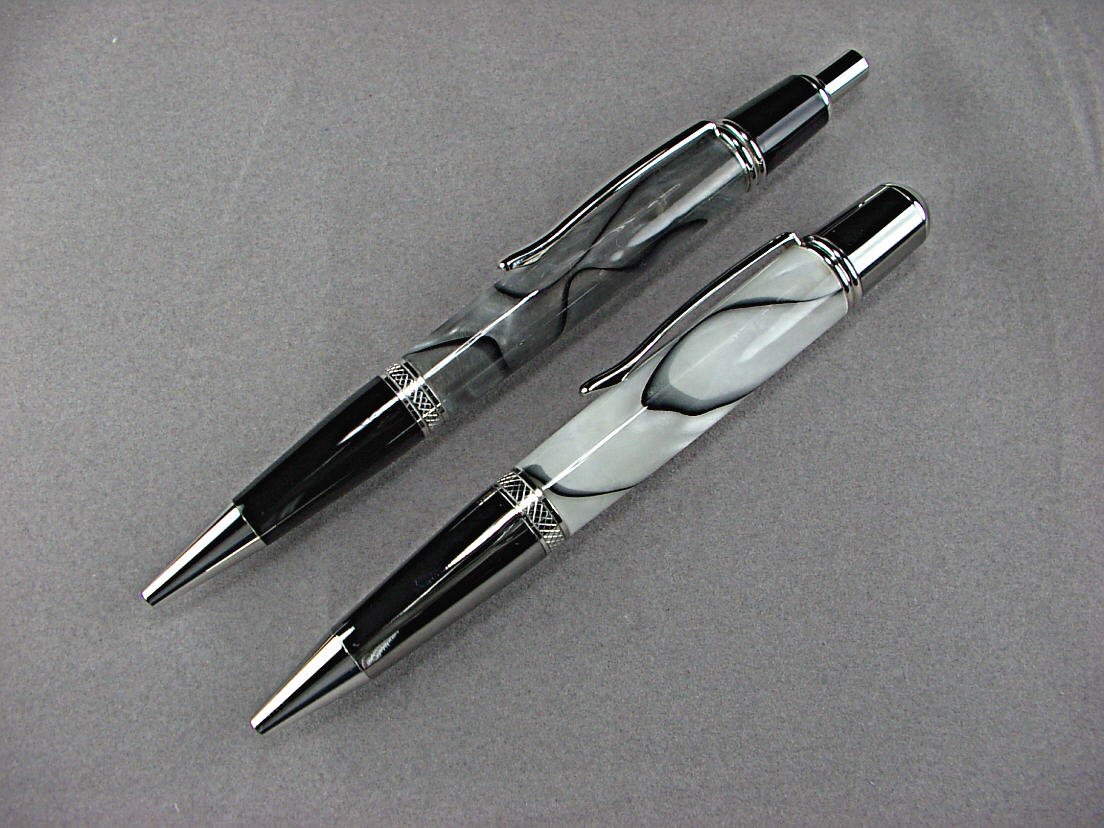
Now choice of color of paint will have an effect on the color of the blank. White will make it very light. red will make it very dark. A pink will between colors and should work well. Here is an example of color differences. Both white and black colors are within the blank. Painting the blank white makes it look light as with painting black it darkens it. Same blank 2 different looks. Just to give you an example of what people are saying here. Good luck.
Thanks John! That is pretty wild the difference it makes.Painting the inside of the blank after it was drill is best. This puts a layer of color between the tube and the glue and the blank. If you paint just the tube you can see the ugliness of the glue through the blank. Yes you can paint both the tube and theinside of the blank and also add paint to adhesive but that is overkill. You can possible make the hole too small with the layers of paint , for the tube so before you glue in tube make sure the tube slides in easily.
Now choice of color of paint will have an effect on the color of the blank. White will make it very light. red will make it very dark. A pink will between colors and should work well. Here is an example of color differences. Both white and black colors are within the blank. Painting the blank white makes it look light as with painting black it darkens it. Same blank 2 different looks. Just to give you an example of what people are saying here. Good luck.
View attachment 395066

i have a paint can rack with about 36 cans of spray paint (all different colors). i try to match (the tube and inside barrel) to the dominant color of the blank. i did start 13 years ago with only white, grey, and black primer.
Last edited:

Woodchipper
Member
Tony, that is a good idea. Looked at various suppliers for the costs. Craft stores have the small cans but, per ounce, is more expensive than the big rattle cans. What brand do you use? Got it on the list for future purchases. I have white and black for now.

howsitwork
Member
That's a great illustration JT.Painting the inside of the blank after it was drill is best. This puts a layer of color between the tube and the glue and the blank. If you paint just the tube you can see the ugliness of the glue through the blank. Yes you can paint both the tube and theinside of the blank and also add paint to adhesive but that is overkill. You can possible make the hole too small with the layers of paint , for the tube so before you glue in tube make sure the tube slides in easily.
Now choice of color of paint will have an effect on the color of the blank. White will make it very light. red will make it very dark. A pink will between colors and should work well. Here is an example of color differences. Both white and black colors are within the blank. Painting the blank white makes it look light as with painting black it darkens it. Same blank 2 different looks. Just to give you an example of what people are saying here. Good luck.
View attachment 395066
I'd never have thought it could make so drastic a difference , live and learn

I use krylon or rustoleaum (sp?). I used a can of french blue 2 days ago (i will post the pen tomorrow), i dated the can 2018 (when I purchased it).Tony, that is a good idea. Looked at various suppliers for the costs. Craft stores have the small cans but, per ounce, is more expensive than the big rattle cans. What brand do you use? Got it on the list for future purchases. I have white and black for now.
The only issue I have is with the spray/caps - they clog. I used to try cleaning them mechanically and with acetone. - even tried turnin the can upside-down after each use and spraying it at the end. Eventually I call krylon and they sent me about 30 spray caps. I still haven't used all of them. They worked great. I know there are doozens of ways to approach this - this is the one that works for me. I alos wait a full 24 hours for the paint to cure.
Worth mentioning: sometimes a blank it too translucent and despite painting, the drill marks (rifling) are still visible (even with light sanding, filling the hole with acetone, etc. ). Perhaps, the folks the color/dye the epoxy have overcome this issue.
Lastly, I have used gloss-finish paint when flat is not available in a color I want, and it worked fine. Good luck! You were offered a lot of excellent advice from the other turners.
jttheclockman
Member
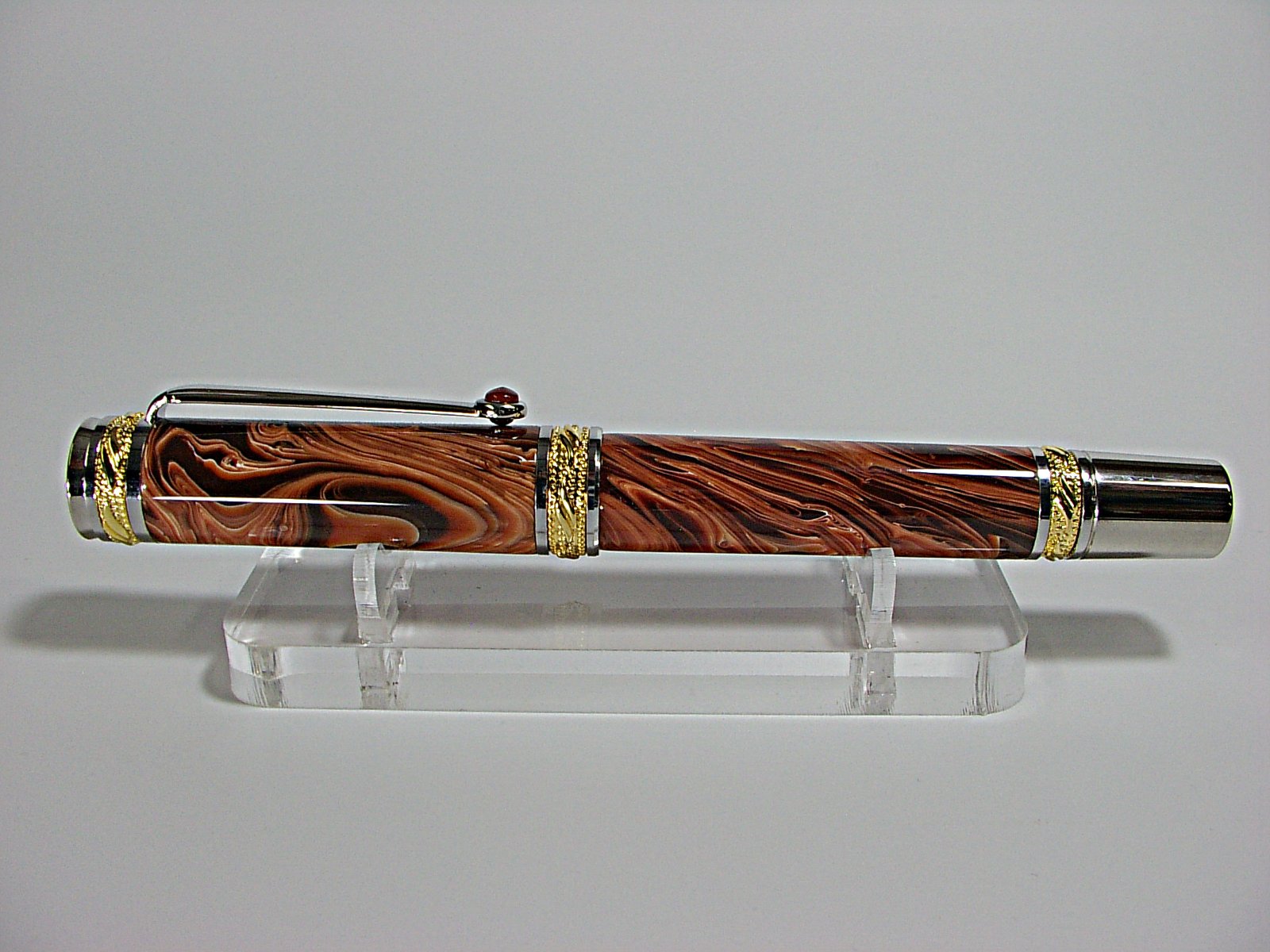
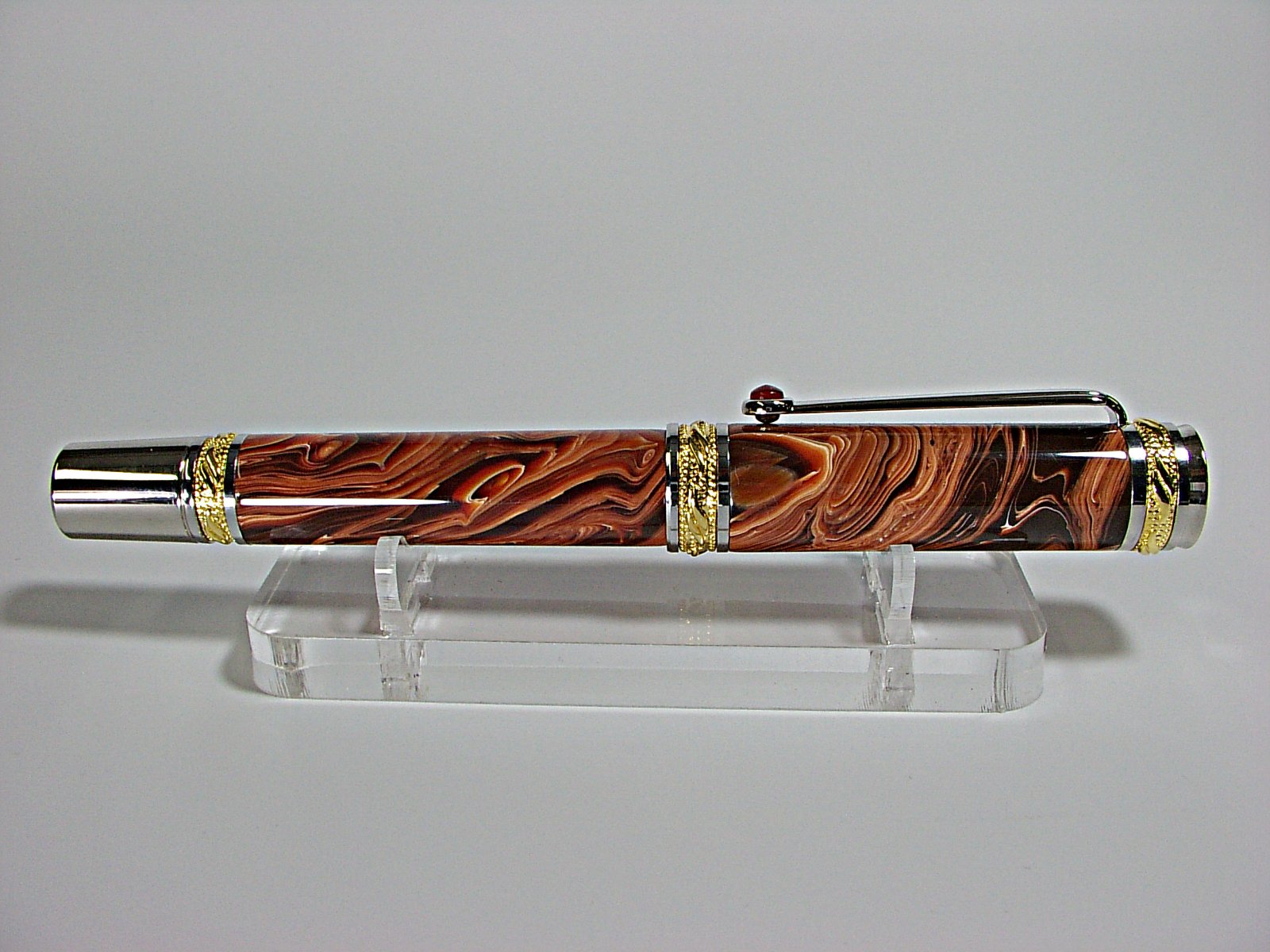
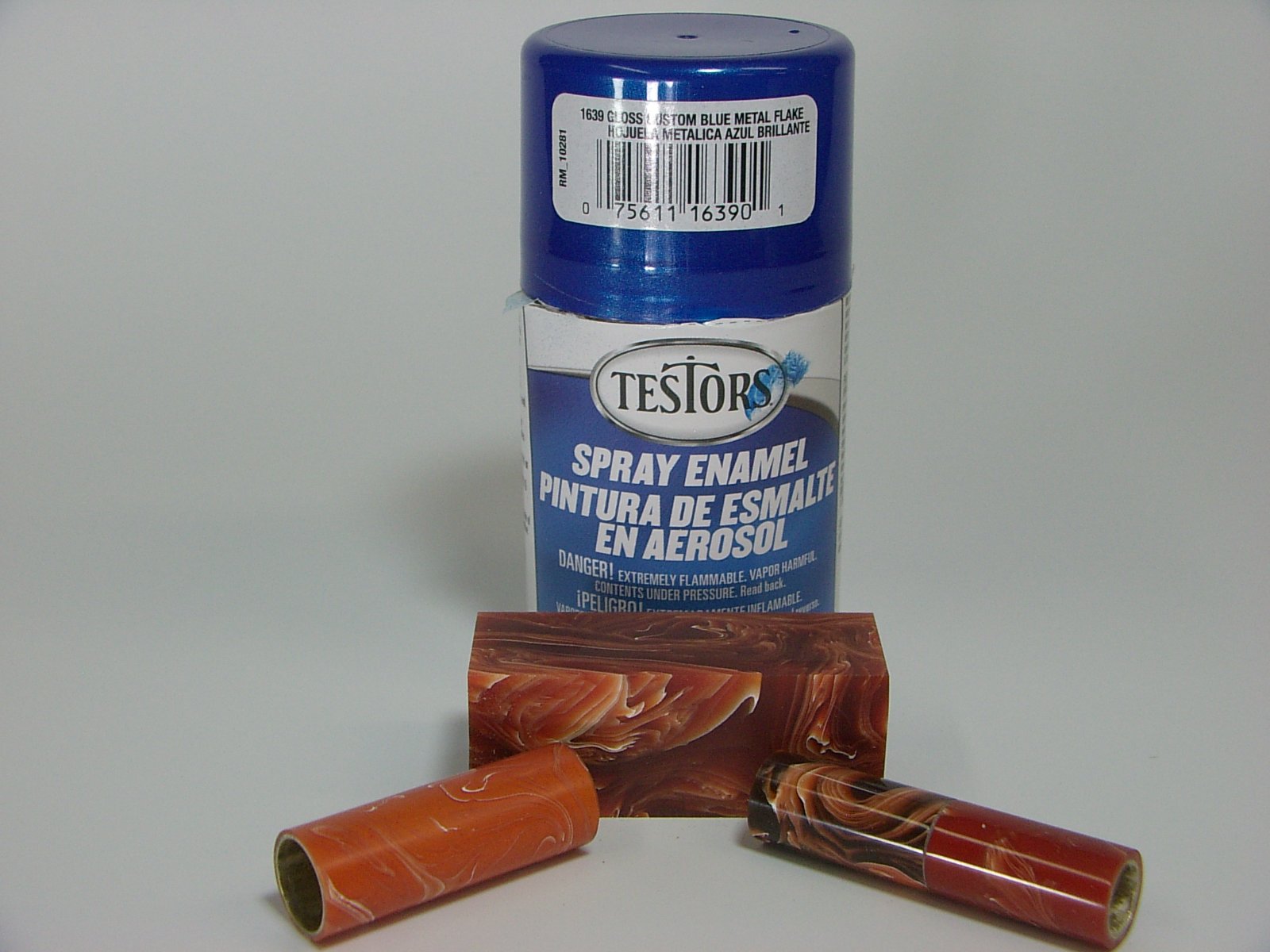
I have shown this example here too a few times. Do not be afraid to try various colors because it can surprise you. In this example, this is Mexican Agatate Trustone. The sample on the left is white. The other sample is red on the bottom and then the blue metallic on top. Turns out the blue brought all colors in the blank out the best in my opinion. There has been threads on this kind of stuff here that you can search for. The trick I picked up over the years here was to make a painting sample dowel with various colored paints on it. Before I install a tube in the finished blank I would push that stick through it and see which color would highlight the blank the best. You can use just a sample portion of the blank you are using and turn it down thin enough to where it really shows the grain patterns. Many times a blank looks so different when it has been turned down from original thickness and it can actually turn away some of the pattern you thought was in the blank. That comes from casting deeply and mixing of the colors. happens to many brands of blanks. Good luck. Have fun.
Last edited:
Woodchipper
Member
I stumbled across a YouTube video where one type of blank was used. The inside of each piece of the blank was sprayed with different colors. Tubes were inserted. It was interesting to see the different effects he got with the paint colors. Anyone know it or the pen turner?
Jans husband
Member
As a start I bought a box of tubes of acrylic paint from The Works for a couple of pounds/dollars (don't know if it's available for you) and used a small artist's brush to paint the inside of the tubes
A cotton bud also works well
No mess from spray cans and better control over coverage of the inside
Works for me and would cost less than a single can
Mike
A cotton bud also works well
No mess from spray cans and better control over coverage of the inside
Works for me and would cost less than a single can
Mike
Jans husband
Member
Sorry!!
Paint the inside of the blank not the tube
Mike
Paint the inside of the blank not the tube
Mike
Woodchipper
Member
I used a craft brush but the paint coats were way too thick. Back to the rattle can.
In the Video Dave shared, he said that an option was to use the lathe and paint the inside with a swab. I think I would like to try this way. It seems more controlled for a smoother/thinner coat. Plus it would be easier for my son to do, because if you let him spray with a rattle can, then this is what you get.
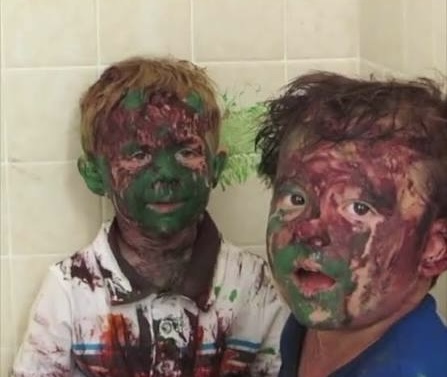
Thank you John for the visual guides with your work. This has been a great lesson from all of the responses here and shows how much of a difference the color choice will make the end result better.The sample on the left is white. The other sample is red on the bottom and then the blue metallic on top. Turns out the blue brought all colors in the blank out the best in my opinion.