Small parts go wherever

Signed-In Members Don't See This Ad

Woodchipper

Member
Joined
Mar 15, 2017
Messages
7,369
Location
Cleveland, TN
We are all aware of Murphy's Law. In pen making, the law dictates any pen part will hit the floor and either bounce or roll into the most inconvenient place in the shop. I got the idea of placing a towel on the bench while assembling pens. Photo attached.
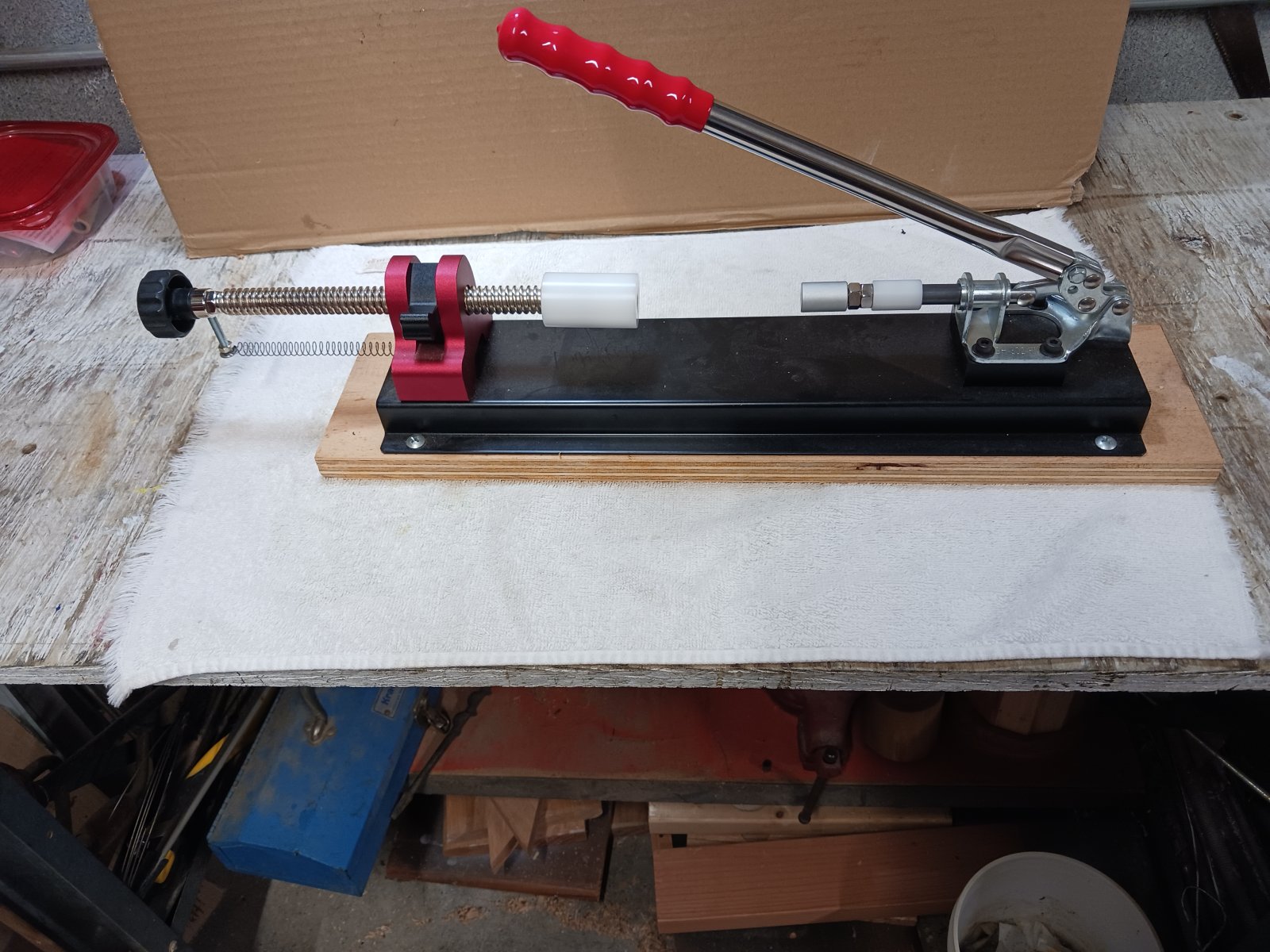
Towel.jpg
 
Signed-In Members Don't See This Ad
I use a white towel for the exact same reason although I use a larger one because I know my ability to spill things. Makes the springs nice and visible too.
 
Been there too. I have a small box similar to the Majestic kit box, that I use to dump the parts in. I used to use a magnetic dish from harbor freight but the square box is easier than the round dish.
 
I always keep bubble wrap on the bench. Things don't usually escape from all the little valleys in it. @JohnU, doesn't HF still have the rectangle magnetic dishes? I have those round ones everywhere (too many partially finished projects! LOL)
 
The magnetic tool keepers from Harbor Freight are great. Now they have different sizes for big parts for cars, lawnmowers, etc. Wife uses one for straight pins in her sewing room.
 
When I used mandrels, that happened all the time with the little spacers. I absolutely hated that. That was a small bit that drove me to TBC where they were/are not used or needed. I am even more appreciative of TBC now as I age and become more bumble fingered!
 
A few months ago I made up a new batch of "Ed's Red" and started giving some of my old rifles a thorough cleaning -- way past due - especially my old Winchester model 190 .22 rifle - has been shot a lot since I was 16 years old and has never really been broken down and thoroughly cleaned - that's 51 years of buildup everywhere except the barrel. Anyhow, I decided to make an "official" version of Ed's Red (the more modern / updated version uses low odor mineral spirits instead of old fashioned turpentine). So, in preparation, I bought a box of Master Paws Large Charcoal Puppy Training Pads to keep my drips and spills from reaching and soaking into my workbench (and to help absorb some of the turpentine's pine solvent smell). They worked great for that purpose! (I had been using a gun cleaning pad that cost about $8 and only lasted me a couple of sessions. The puppy pads were only $15 for a box of 50 -- that's only $0.30 each!

So, since then I've been using either the Large 28" x 30" pads or a smaller 22" square puppy pad (only $0.20 each) on my workbench for all kinds of things - including working on pens!

They advertise a 5-layer liquid locking system including an activated carbon layer for odor reduction. The back is made from something that prevents liquids from leaking through onto my bench if they don't get absorbed by the various layers. The back also has some light adhesive strips that can be used to keep the pad from sliding around on the bench. The top is some kind of soft, cloth-like layer that works a lot better than the sheets of packing paper I used to use because any spills or drips get absorbed instead of laying on top and getting spread around by anything they touch.

Dave
 
Dave, we used kerosene in basic training. If one looks, Hoppe's #9 is kerosene based. Recall my old Red Ryder BB gun was not working properly. Uncle went to the diesel tank (used for farm equipment) and ran a bit through it, cocked it and shot it several times.
 
Dave, we used kerosene in basic training. If one looks, Hoppe's #9 is kerosene based. Recall my old Red Ryder BB gun was not working properly. Uncle went to the diesel tank (used for farm equipment) and ran a bit through it, cocked it and shot it several times.
Yes. The Ed's Red formula I use is equal parts of Acetone, Dexron III ATF, 1-K kerosene, and Turpentine. So far I like using it better than Hoppe's and it's a lot less expensive!

For those who are not familiar, Ed's Red was invented by a firearm expert that worked for Ruger and wrote a lot of articles for the American Rifleman Magazine. It is made of a solvent (acetone), lubricant (ATF), penetrant (Kerosene), thinner (Turpentine), and protectant (lanolin). The Acetone dissolves plastic wad residue in shotguns and breaks down any caked-on carbon and powder fouling. The ATF acts as a cleaner because it contains surfactants and antioxidants that help loosen rust and as a lubricant it helps protect against future corrosion. The Kerosene helps the solution penetrate into metal pores to reach trapped carbon. The Turpentine helps keep the other ingredients in suspension and helps dissolve any oil-based residues.

Unfortunately, the version of Ed's Red I use is not effective at removing copper fouling from plated and FMJ ammunition. Someone did come up with a modification usually called "Ed's Red Plus" that is supposed to work on copper. It essentially adds a clear (non-sudsy) Ammonia along with Anhydrous Lanolin as an emulsifier - to help keep the water based Ammonia from separating from the other, oil based, materials. So far I haven't made any of this version. I can get the Ammonia from my local Ace Hardware, but I would have to order Anhydrous Lanolin from somewhere as I can't find it off-the-shelf anywhere. (I have read that Extra Virgin Olive Oil might be a suitable substitute for the Lanolin though as they both contain some percentage of oleic acid which is an emulsifier and surfactant that helps stabilize oil and water mixtures).

Anyhow - I didn't mean to steal the thread, but I kind of get off on understanding the science behind some things. - Dave
 
Back
Top Bottom