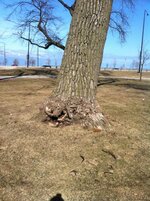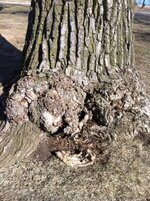
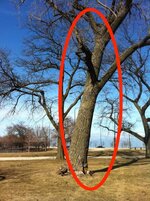
Can any one ID this Tree?

Signed-In Members Don't See This Ad

Exabian

Member
Joined
Oct 26, 2012
Messages
266
Location
South Korea (Camp Humphrey)
Need help ID'ing this tree. I found some Burl that was knocked off from this Tree by a car accident. I don't know the details of the accident, I wasn't there, but the evidence around the tree screams some one hit it. Regardless I picked up a few turnable size pieces and would like to ID the burl. Any help will be appreciated.
 

Attachments

  • Image 3-24-13 at 7.06 AM.jpg
    Image 3-24-13 at 7.06 AM.jpg
    76.2 KB · Views: 321
  • IMG_2277.jpg
    IMG_2277.jpg
    74.2 KB · Views: 269
  • IMG_2275.jpg
    IMG_2275.jpg
    98.6 KB · Views: 280
Signed-In Members Don't See This Ad
It is a poisonous wood for Illinois turners. :eek: You need to ship it to me where the thin air won't allow the poison to affect the turner. :biggrin:

great find.
 
Why not an oak tree. Probably no acorns, right.
My second guess is elm.
But I did really bad in the bash at guessing wood also.
 
Well after doing some research on the trees in this area and got more info then I knew what to do with. I researched the park it self and found out that all of the trees in that park are........ ASH trees. So there it is, thank you every one for there help. Now to turn the pieces into blanks and get to turning ::evil laugh::
 
Its hard to argue with someone that knows what's in the park but on the ground under that tree in the pictures looks like long dried beans and if they came from that tree it would be a Catalpa tree. I've scored some very nice burl from local Catalpa. You will probably need to wait and see what the leaves look like to be positive.
 
IMHO it is a little known tree called the Mug Wump tree, named after a large bird that sits on a branch with his Wump on one side and Mug on the other.
All seriousness aside, I have no idea what it is.
 
The bark looks a bit like Elm to me as does the shape of the tree. It's difficult without getting a look at the leaves.

Jim Smith
 
Its hard to argue with someone that knows what's in the park but on the ground under that tree in the pictures looks like long dried beans and if they came from that tree it would be a Catalpa tree. I've scored some very nice burl from local Catalpa. You will probably need to wait and see what the leaves look like to be positive.

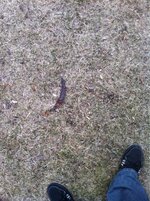
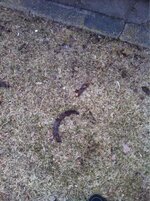
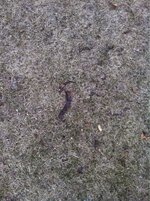
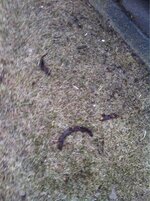
I looked up the catalpa tree, the seed pod look different from what on google (then again it could be wrong) but I took pis of the seed pod on the ground. There are some smaller tress around it that might produce the pods though. What do you think?
 

Attachments

  • image-494889733.jpg
    image-494889733.jpg
    66.6 KB · Views: 134
  • image-1731476500.jpg
    image-1731476500.jpg
    81 KB · Views: 128
I looked up the catalpa tree, the seed pod look different from what on google (then again it could be wrong) but I took pis of the seed pod on the ground. There are some smaller tress around it that might produce the pods though. What do you think?

Here are some more pics
 

Attachments

  • image-2756895024.jpg
    image-2756895024.jpg
    75.5 KB · Views: 107
  • image-810868893.jpg
    image-810868893.jpg
    82.8 KB · Views: 110
Well after doing some research on the trees in this area and got more info then I knew what to do with. I researched the park it self and found out that all of the trees in that park are........ ASH trees. So there it is, thank you every one for there help. Now to turn the pieces into blanks and get to turning ::evil laugh::
Well the bark looks right for mature Ash trees, but another identifying trait opposing branches doesn't seem to be there, but there could be a lot of reasons for that. The leaves will tell you for sure, but if the only trees in the park are Ash, it's probably ash.
 
Ash trees do have pods similar to thoose on the ground and if the park has all ash trees then that would be the most likely answer.
 
I was thinking Ash as well. Looks like one in my neighbors yard. Do I win a shop thermometer?
 
Well after doing some research on the trees in this area and got more info then I knew what to do with. I researched the park it self and found out that all of the trees in that park are........ ASH trees. So there it is, thank you every one for there help. Now to turn the pieces into blanks and get to turning ::evil laugh::
Well the bark looks right for mature Ash trees, but another identifying trait opposing branches doesn't seem to be there, but there could be a lot of reasons for that. The leaves will tell you for sure, but if the only trees in the park are Ash, it's probably ash.

You know what they say, if it walks like a duck, quacks like a duck, it probably an ash tree. :biggrin::biggrin::biggrin::biggrin:
 
Well after doing some research on the trees in this area and got more info then I knew what to do with. I researched the park it self and found out that all of the trees in that park are........ ASH trees. So there it is, thank you every one for there help. Now to turn the pieces into blanks and get to turning ::evil laugh::
Well the bark looks right for mature Ash trees, but another identifying trait opposing branches doesn't seem to be there, but there could be a lot of reasons for that. The leaves will tell you for sure, but if the only trees in the park are Ash, it's probably ash.

You know what they say, if it walks like a duck, quacks like a duck, and is found in the company of ducks,it probably an ash tree. :biggrin::biggrin::biggrin::biggrin:
Just wanted to make sure you didn't forget something --- you are gettin a little long in the tooth ya know:biggrin::biggrin::biggrin:
 
Those seed pods look like honey locust, but the bark on that tree looks like ash. I'm sure the pods didn't come from that tree. I think I raked up about 6 garbage cans full of those pods this year from our honey locust.
 
Those seed pods look like honey locust, but the bark on that tree looks like ash. I'm sure the pods didn't come from that tree. I think I raked up about 6 garbage cans full of those pods this year from our honey locust.

There are some smaller looking tree in the area that I think produced those pods.
 
Back
Top Bottom