
amtechrs
Member
I was asked to show the method I used to create some accent rings in this pen.
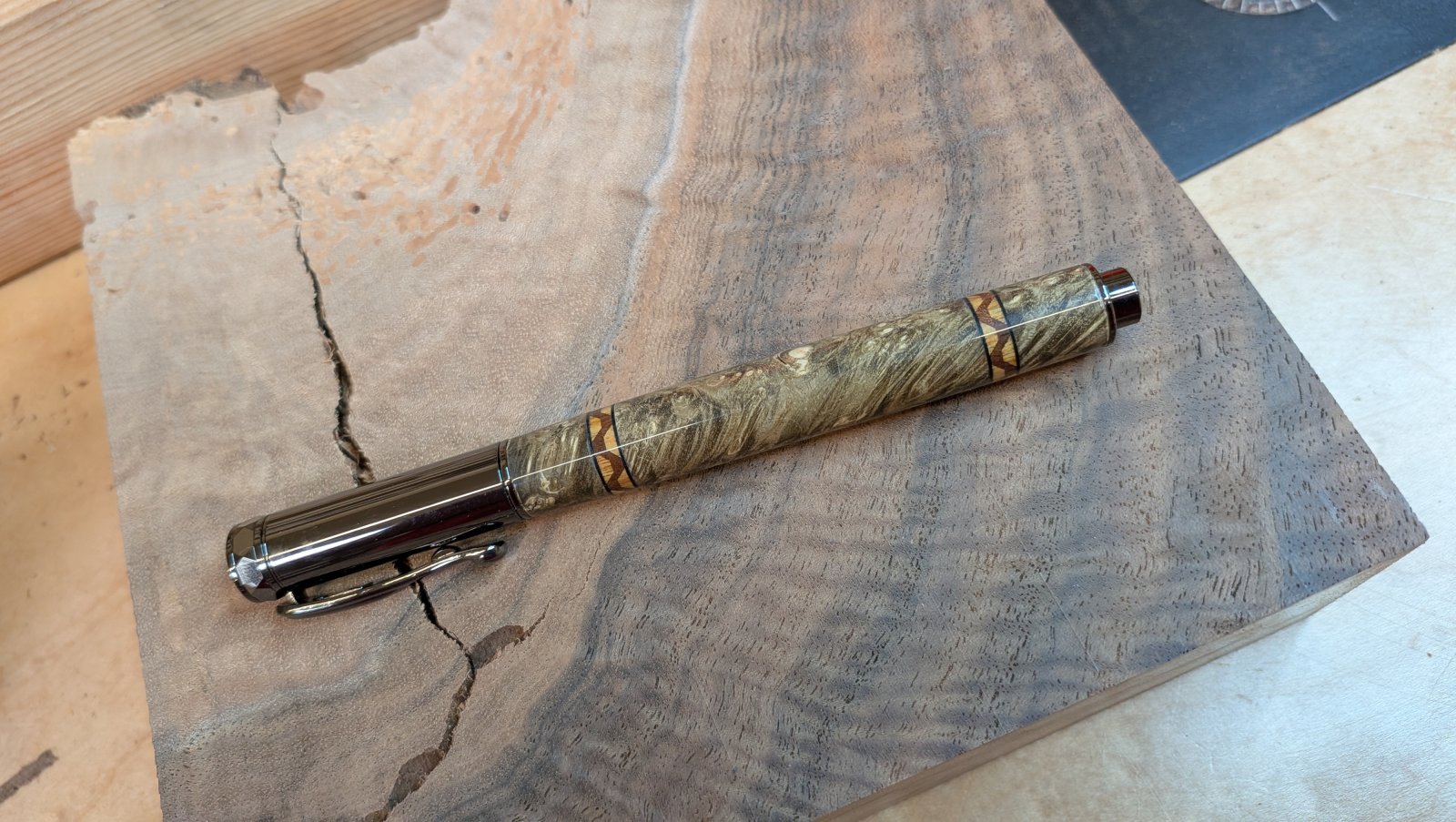
First off, I use VCarve Pro for the CNC programming, as it has a nice feature for creating V-carve inlays where it automatically creates the mirrored plug layout to fit inside the v-carve. This method is popular for inlays in end-grain cutting boards. You can use a variety of tapered bits. I've used 22 degree (included angle) up to 90 degree bits. I used 90 degrees for these rings.
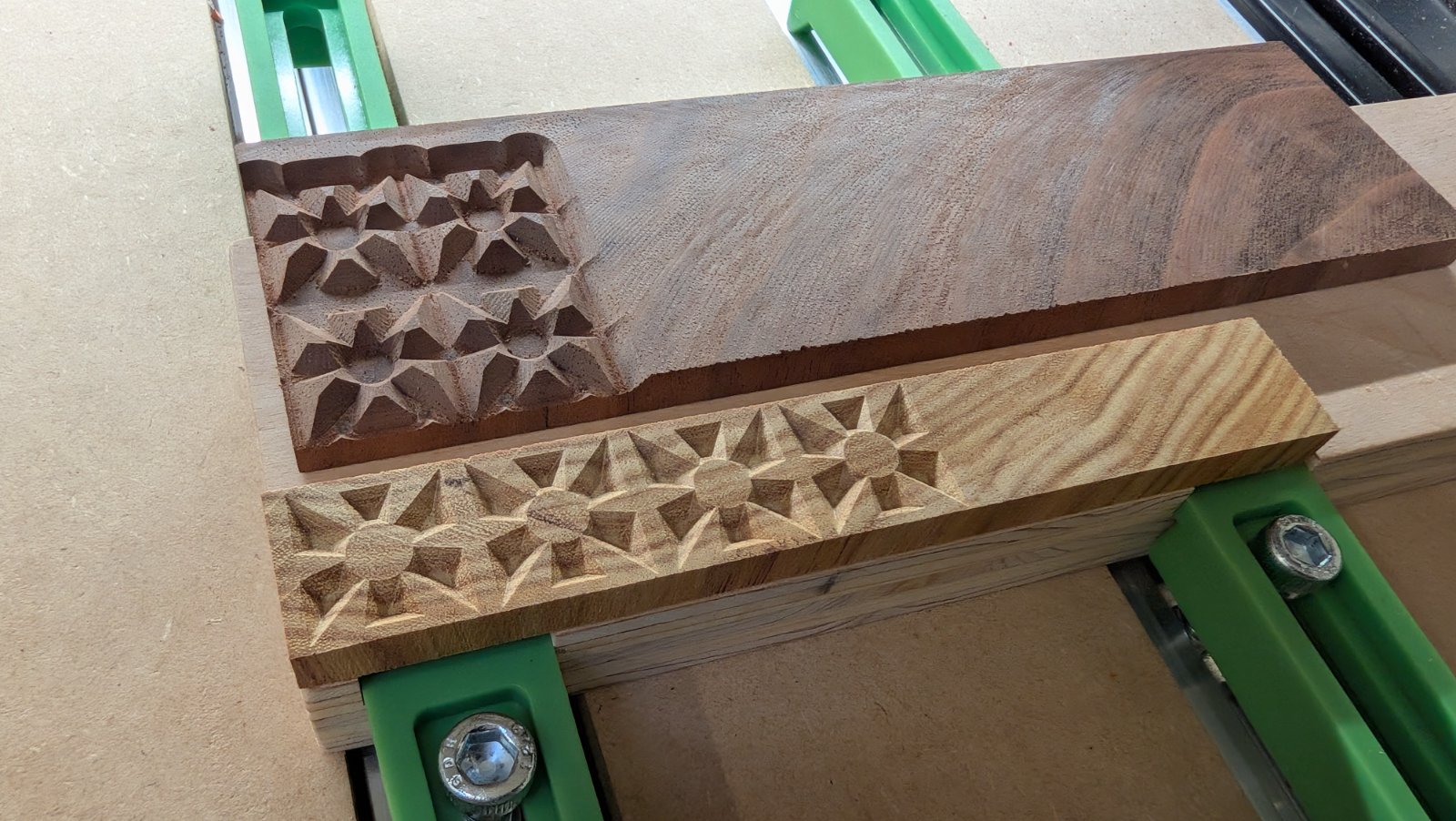
Here is a photo of the initial plugs milled into end grain walnut, and the v-carved pockets in canarywood.
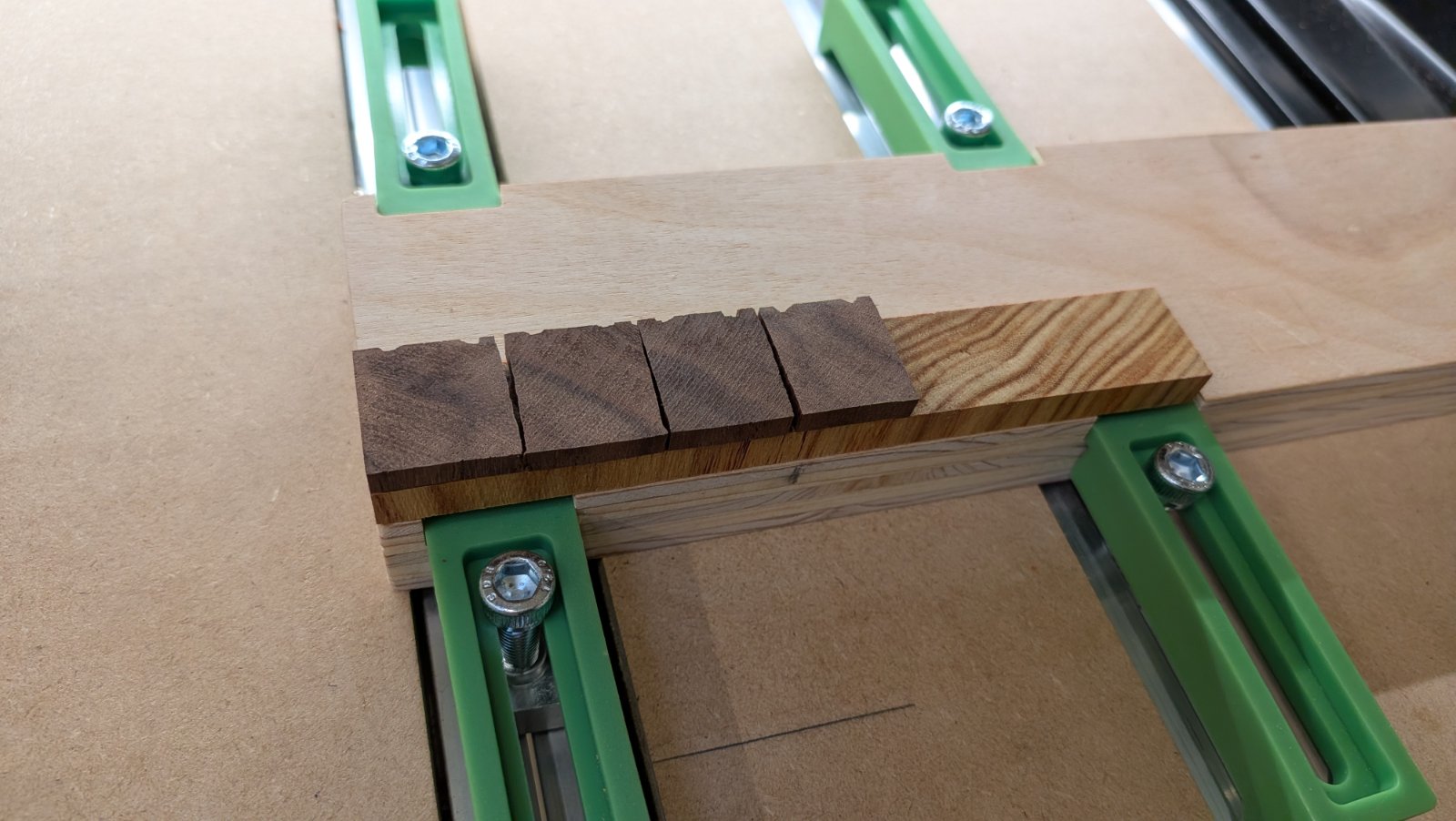
After cutting the walnut plugs into individual sections, I use CA to glue them into the v-carved pockets.
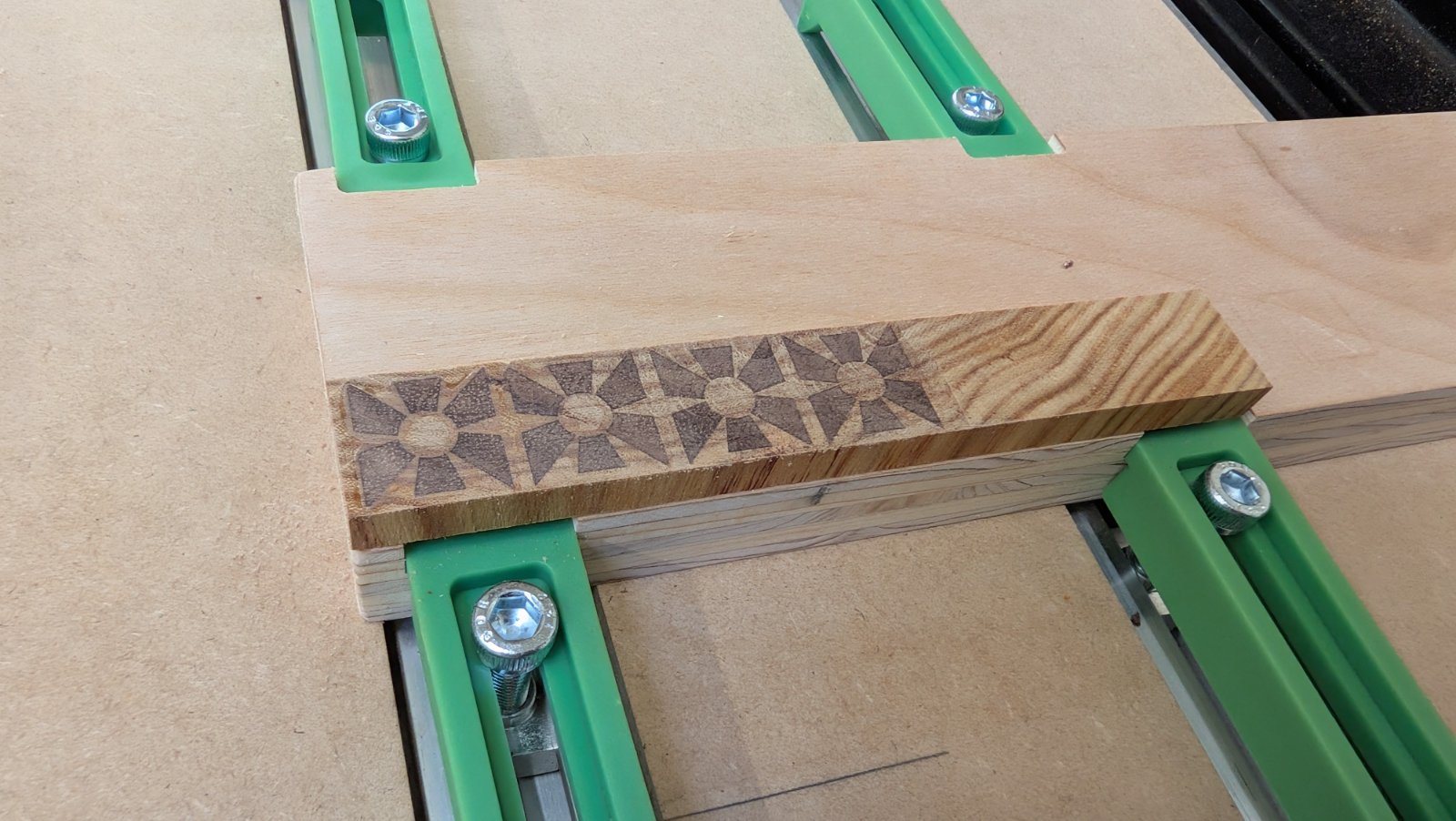
And then milled off the excess backing off the walnut plugs back to the surface of the canarywood.
After that, I milled the contours for the inside bore and outside blank size.
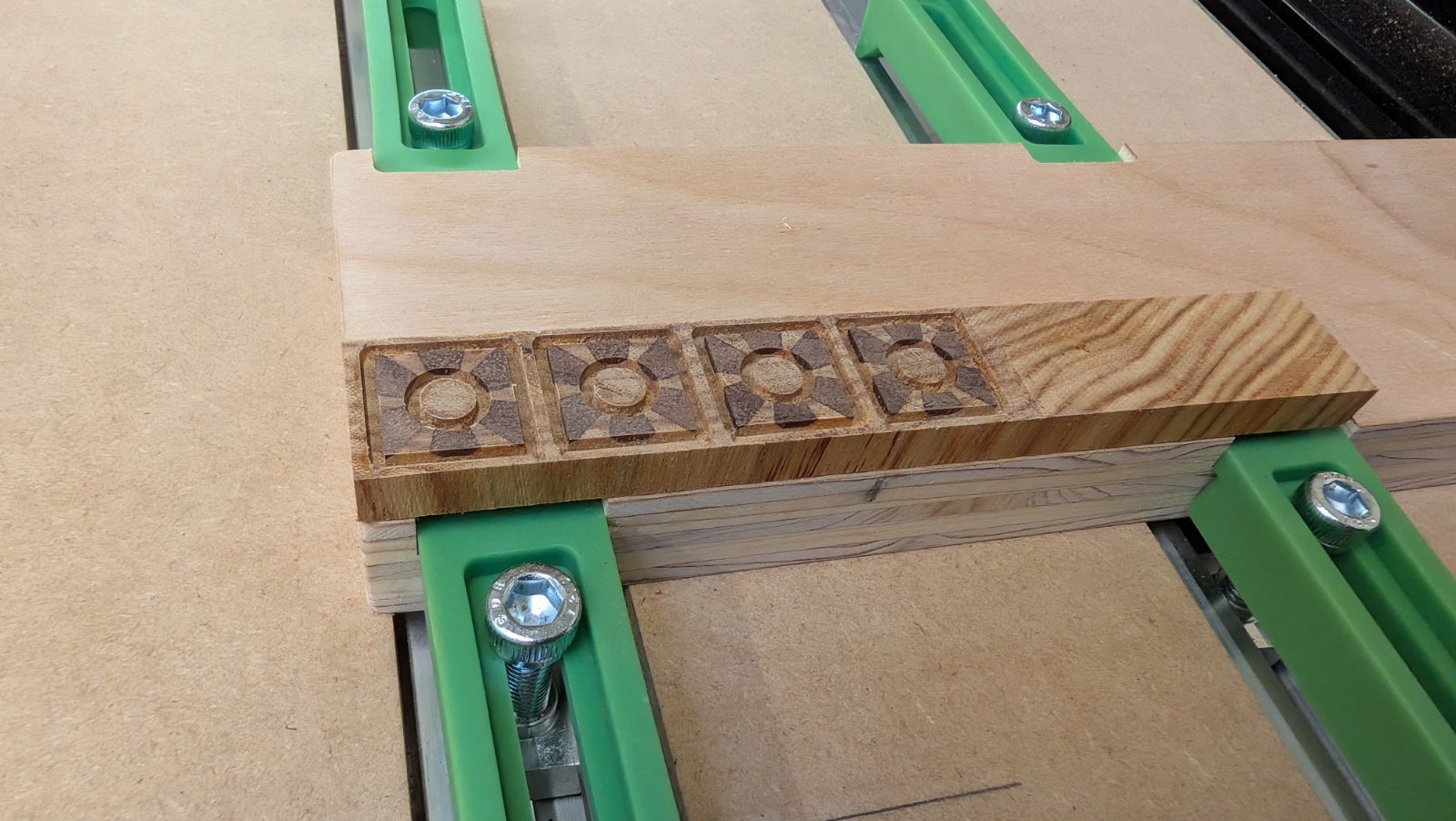
Then off to the band saw to cut the individual sections and most of the excess backing off. Then sand the residual excess off. I just milled a pocket into a scrap piece, with the pocket depth being the finish thickness of the ring.
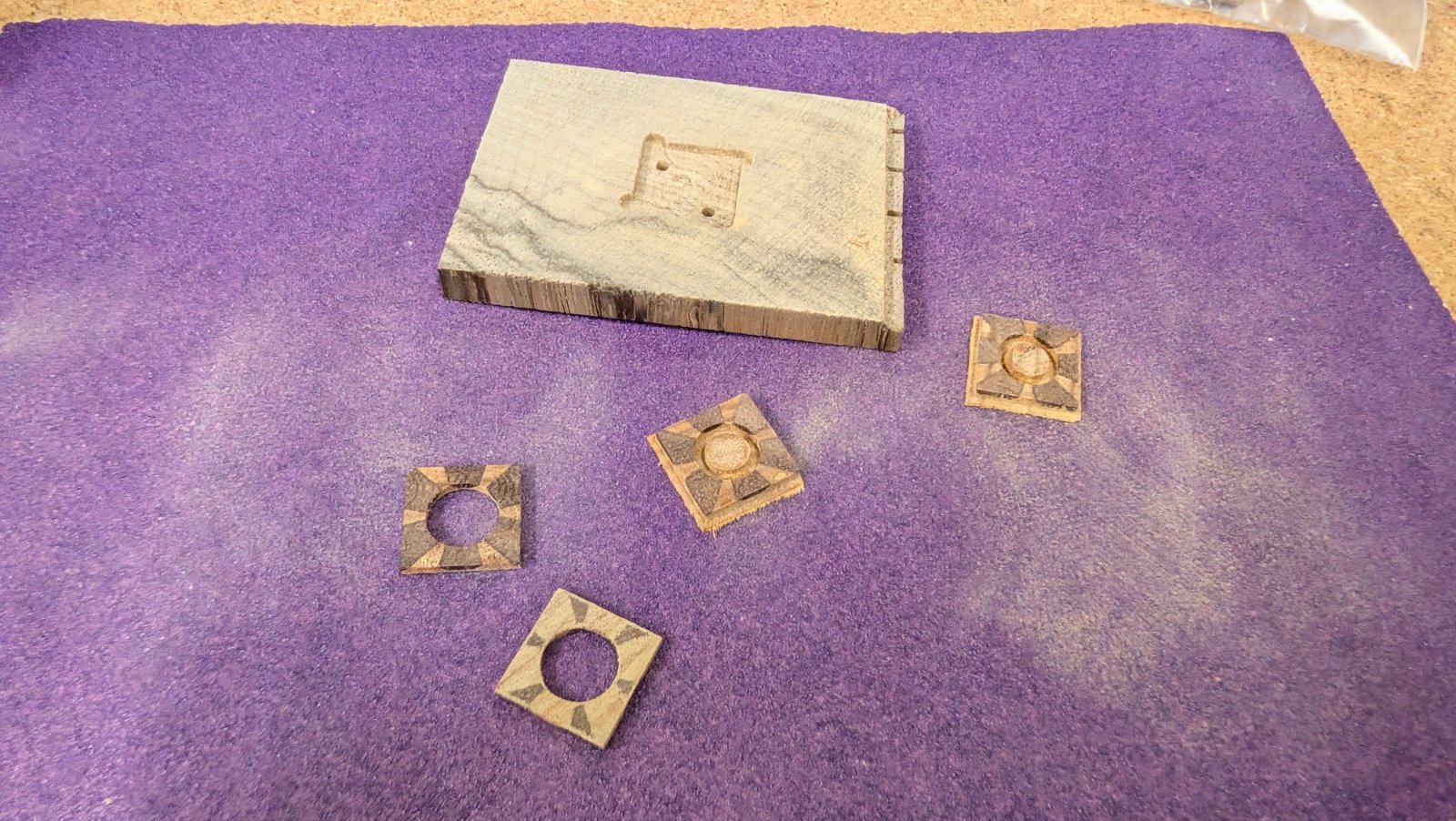
My original idea was to make a diamond-ish pattern ring, gluing two sections face to face. Then I accidentally turned one section 90 degrees and noticed the zig-zag pattern and decided to try that.
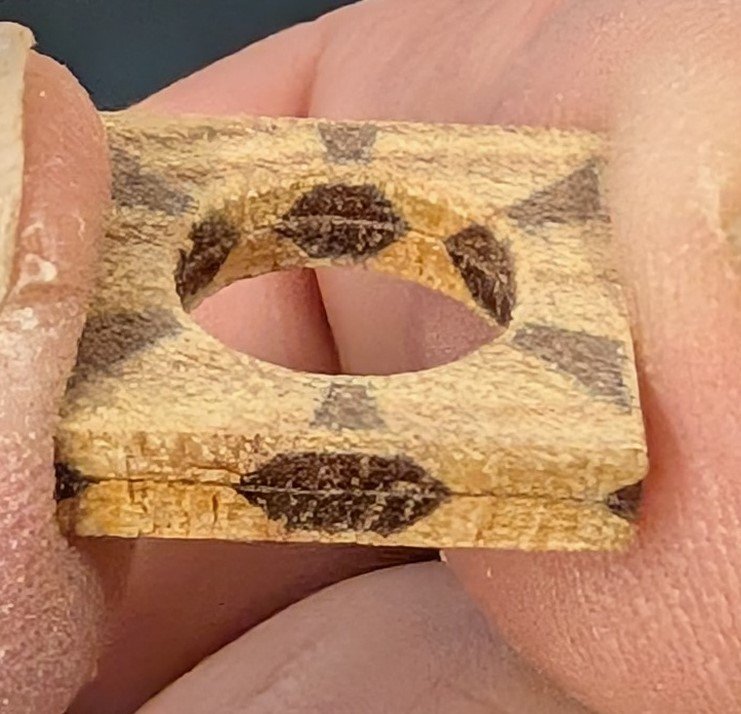
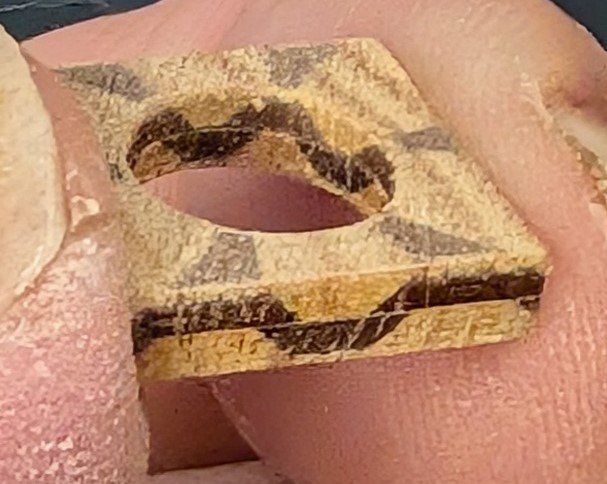
Yesterday I started making a thicker accent ring section, that will not get stacked (yet). I plan to just add a copper or brass accent shim on both sides.
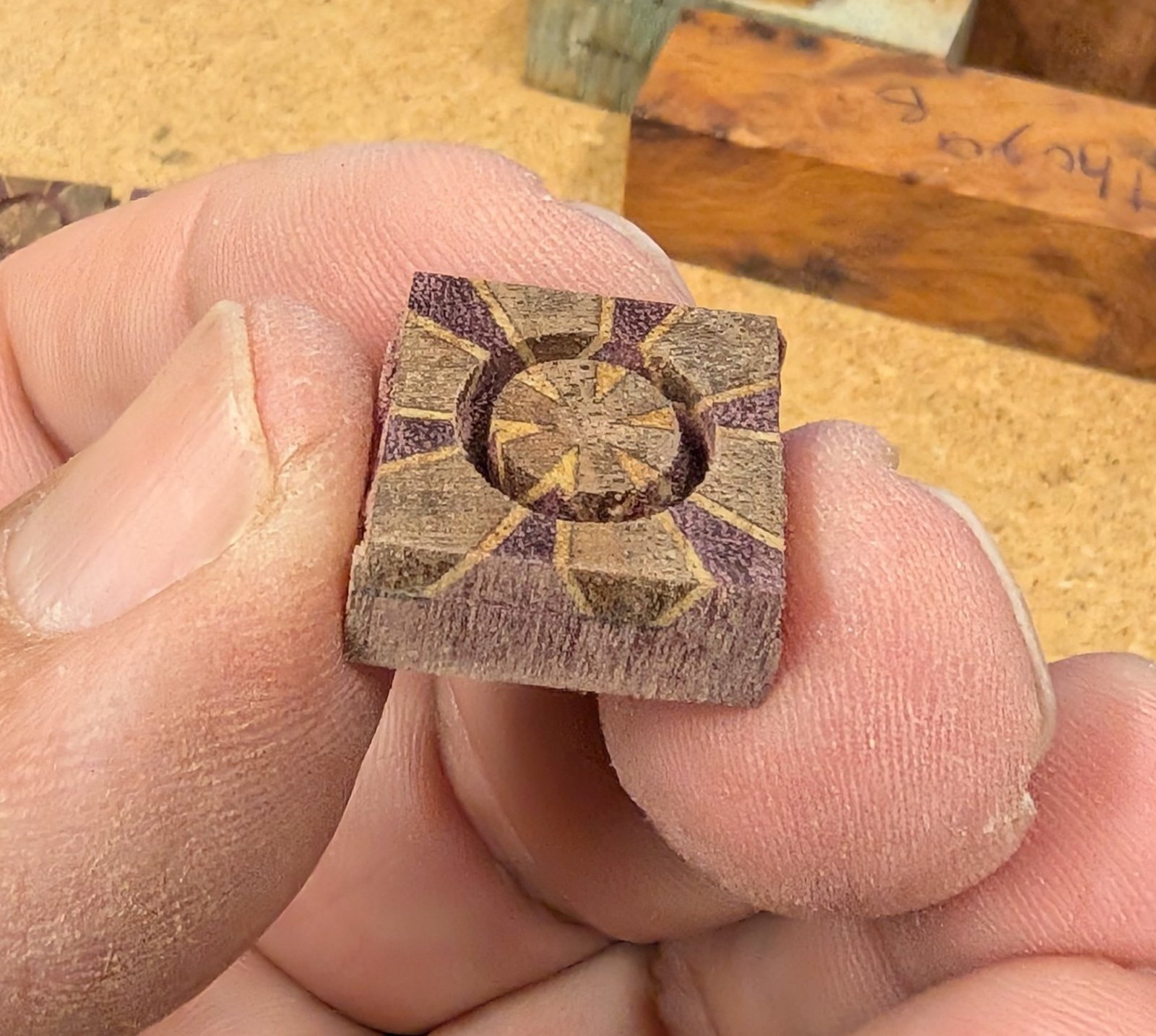
Obviously, I still need to cut the excess backing and sand to finish thickness. I used purple heart base, canarywood initial inlay, then re-carved and plugged with walnut. I'll post some finished pictures of that if it turns out. BTW, it took every bit of 5 hours to make four of those 3-tone accent rings to the stage in that photo.
Hope that didn't bore the snot out of you!
Best,
Richard
First off, I use VCarve Pro for the CNC programming, as it has a nice feature for creating V-carve inlays where it automatically creates the mirrored plug layout to fit inside the v-carve. This method is popular for inlays in end-grain cutting boards. You can use a variety of tapered bits. I've used 22 degree (included angle) up to 90 degree bits. I used 90 degrees for these rings.
Here is a photo of the initial plugs milled into end grain walnut, and the v-carved pockets in canarywood.
After cutting the walnut plugs into individual sections, I use CA to glue them into the v-carved pockets.
And then milled off the excess backing off the walnut plugs back to the surface of the canarywood.
After that, I milled the contours for the inside bore and outside blank size.
Then off to the band saw to cut the individual sections and most of the excess backing off. Then sand the residual excess off. I just milled a pocket into a scrap piece, with the pocket depth being the finish thickness of the ring.
My original idea was to make a diamond-ish pattern ring, gluing two sections face to face. Then I accidentally turned one section 90 degrees and noticed the zig-zag pattern and decided to try that.
Yesterday I started making a thicker accent ring section, that will not get stacked (yet). I plan to just add a copper or brass accent shim on both sides.
Obviously, I still need to cut the excess backing and sand to finish thickness. I used purple heart base, canarywood initial inlay, then re-carved and plugged with walnut. I'll post some finished pictures of that if it turns out. BTW, it took every bit of 5 hours to make four of those 3-tone accent rings to the stage in that photo.
Hope that didn't bore the snot out of you!
Best,
Richard