Spalted Maple

Signed-In Members Don't See This Ad

Marker

Member
Joined
Sep 6, 2011
Messages
297
Location
Ludlow, pa, 16333
Hello, I just want some opinions, on Spalted maple.

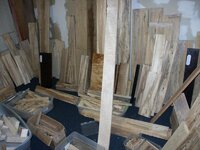
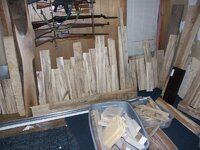
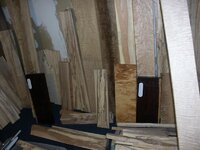
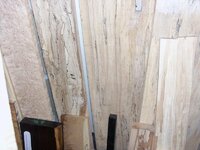
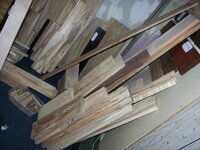
I have more then I will ever need for myself, and I Don't know what to do with it all. I have more pieces than shown it the pictures.

How do you stabilize spalted maple.?

Most seems to be hard enough the way they are now, so it may not be necessary.


I am thinking of trying to sell some of it, would you recommend cutting it all up into pen blanks? or just selling the pieces that way they are? Some are big, over 16" wide, some are 4" thick. I have some pieces book matched.


Do the bigger pieces bring a premium, and therefor I shouldn't cut them up into pen blanks?


I am thinking about trying to sell a few pieces on ebay.


What are your guys thoughts on all of this?


Thanks
 

Attachments
  • 001.jpg
    001.jpg
    73 KB · Views: 263
  • 003.jpg
    003.jpg
    67.7 KB · Views: 215
  • 004.jpg
    004.jpg
    78.5 KB · Views: 360
  • 005.jpg
    005.jpg
    60.5 KB · Views: 195
  • 008.jpg
    008.jpg
    64.7 KB · Views: 265
Last edited:
Signed-In Members Don't See This Ad
I would leave it in the larger sizes. It will appeal to a wider audience. If you cut it into pen blanks you basically are just targeting pen makers, but if you leave it in the larger slabs you could intrest all woodworkers. BTW is that AK-47 at the top of that gun rack?
 
:smile::smile: Spalted Maple makes some of the most interesting wooden items. You are never sure what your getting until you turn or mill it. I would leave the pieces the size they are. You can always cut them down if need be. One thing I would do is not stand them on end as you have them now. If they are still green (fresh cut) they will warp and twist. Lay them out flat with stickers (1/4" thin slats) between them every 6-12"s. This helps the air move around the boards and drys them more evenly. Turn and restack once a month. Once out of the dampness the fungus will stop spreading and dry up. Use a clear finish to bring out the beauty of the wood. If the wood has turned soft, you have dry rot and unstable wood. You can stabilize your blanks with CA, but it's not worth the effort when you have that much on hand. Jim S
 
I thought I had a bad case of WAD (Wood Acquisition Disorder) until I saw these pictures. :eek: You need help my friend! :wink: Seriously though, I agree with the previous posts. Keep them the size they are.

Jason
 
Blanks

If you do cut up a little in to blanks, I would be interested in a small flat rate box 5/8 x 5/8 x5. The heavy blacklined stuff and heavy curly. I will make slims and if it isnt heavy spalted you could turn it all off. PM me if you are interested with the price.
 
I just got done taking picture of one piece that is 4"x5 7/16" x 45", dried for abot 22 months, and surfaced on all for sides.

I really dont want to cut pieces slike this one up, but wouldn't it be more profitable to cut them up into smaller pieces? I mean this is what people do to sell pen blanks...That is buy a big piece, and cut it up. then they get more per board foot by cutting it up into pen blanks.
 
Last edited:
I just got done taking picture of one piece that is 4"x5 7/16" x 45", dried for abot 22 months, and surfaced on all for sides.

I really dont want to cut pieces slike this one up, but wouldn't it be more profitable to cut them up into smaller pieces? I mean this is what people do to sell pen blanks...That is buy a big piece, and cut it up. then they get more per board foot by cutting it up into pen blanks.

That is true. However you also have the time it takes to cut them all up which has to be worth something. I'd say in the end its a wash.
 
You definitely pay a premium for small pieces of nice wood. Although this is normally because you are buying so little. Most pen makers won't make 24 pens from the same material so buying even 1 bdft (12x12x1 or 24+ pen blanks) doesn't make sense. Those that are making a lot of pens from the same material are likely buying it in larger pieces and cutting it up themselves.

If you think there is a market for 5,000 (guesstimation based on 200 bdft) spalted maple pen blanks then cut them up. Though you'll need 1000 customers to sell them too. Not cut up you'll likely sell the lot to just a couple people. You might make more but it'll be a lot more work and time to see the results.

If it were my wood, I'd sell it as is and maybe cut up 100 pen blanks to list in the classifieds.

AK
 
Cut some for pen blanks, preferably the heavily spalted and roll with it. If you cut one up and get 40 pen blanks, how much of your stock is depleted?
 
In my humble opinion, cut them into 3/4 X 3/4 X 12 inch blanks. When turners need to do closed end projects the five inch blanks are too short. Someone might need the option of a 12 blank and will pay for it. But then, cut some five inch blanks for easy sales. I would say a quarter of them should be twelve inch blanks.

I would love to have some. Keep me on your list for the twelve inches.

John
Lake Arrowhead.
 
I think that cutting some into .75"x.75"x12" may be a good idea. This way I could always cut them in half to get two blanks, I have always perfered 6" blanks over 5" blanks.


I think that I will cut up some of the smaller pieces for right now, and maybe I will cut them all up.


In my humble opinion, cut them into 3/4 X 3/4 X 12 inch blanks. When turners need to do closed end projects the five inch blanks are too short. Someone might need the option of a 12 blank and will pay for it. But then, cut some five inch blanks for easy sales. I would say a quarter of them should be twelve inch blanks.

I would love to have some. Keep me on your list for the twelve inches.

John
Lake Arrowhead.
 
I Rescued all of these pieces from going into the chipper at a sawmill I worked at as a hardwood lumber grader. I am still working as a lumber inspector, but not for the same company, and unfortunately the mill I am working for now, does not cut hard maple:(
 
Count me in too, if you have some pen blanks with heavy spalting. People will pay a premium for figured wood. Check out the classifieds and premium classifieds on this site to see how it's done.
Cheers
Catherine
 
I think that cutting some into .75"x.75"x12" may be a good idea. This way I could always cut them in half to get two blanks, I have always perfered 6" blanks over 5" blanks.


I think that I will cut up some of the smaller pieces for right now, and maybe I will cut them all up.


In my humble opinion, cut them into 3/4 X 3/4 X 12 inch blanks. When turners need to do closed end projects the five inch blanks are too short. Someone might need the option of a 12 blank and will pay for it. But then, cut some five inch blanks for easy sales. I would say a quarter of them should be twelve inch blanks.

I would love to have some. Keep me on your list for the twelve inches.

John
Lake Arrowhead.
kEEP ME IN MIND ANYWAY, ANYHOW, ANYWHERE.
 
My advice, DO NOT cut them up until you have a reason to. Lots of folks make stuff like turkey and duck calls, shaving brushes etc. that take larger blanks. Especially the 4" stuff.
 
Dont cut them up. Knife blocks are also good sellers, pen blanks as well. Then you have boxes and other things.

As for stabilizing goes WSSI and that other place (forgot the name now but P&something) is the professional shops to use, dont attempt the home stuff, it's all crap for the most part and it's more worthwhile to sent it in. Just find the good sections and send that in.
 
:smile::smile: This is the method I use to get highly figured pens out of my spalted maple blanks. The outside of the blank may be highly figured, but you are going to turn this away. Look at the ends of the blanks to see if the spalting crosses the center axis. Remember you are also going to drill out the center. It may be to your advantage to drill the blank off center to gain the most figure. If you put your blank in the drill vice and bring the drill down on the top of your blank and look on the outside of your drill, you can see exactly what you are going to get when you turn it. Look at both ends to make sure the spalting runs all the way from end to end. When I cut my boards into blanks, I look at the ends and adjust the cut in order to get the best figure possable. You may waste some wood, but the blanks you cut will far outway this loss. Jim S
 
Last edited:
Sorry for not getting back to you guys sooner.


I Just placed an order for one of MesquiteMan's actus Juice Stabilizers. Once I get the order in a month or two I will Start stabilizing pen blanks and listing them in the classifieds.

IMO Not all of these pieces need to be stabilized. but I think I will stabilize them just to insure the overall quality of the blanks.

I have started to cut up certain pieces for pen blanks.


Do you think that one could use a hardness tester to determine whether or not a blank should be stabilized? I mean something like the system that people use to test lead to see if it is suitable for casting bullets.
 
Last edited:
True stabilizing is well beyond the hardness of the wood, well beyond the impregnation of one chemical into the wood. Most on this board gets way to caught up in methods/technicality's, esp vacuum, that they are unable to say the good 25-30+ points of consideration when doing the stabilizing process.

One thing that I was unable to see from your post was how you plan on dealing with the 3 divisions of zones on this spalting. I would really like to urge you to research the wood type that you have and gain a good understanding of what you are working with before doing any stabilization consideration. There are a major pitfalls and gotcha's when dealing with spalting that must be addressed and fixed long before the process starts.


Here is a recent project that I have done. We have very heavy amounts of Deuteromycota and Ascomycota with some very early stage brown rot, fortunately we were able to salvage a good amount and this project went off quite nicely.

IMG_9909.JPG

This is post processing by WSSI and unmolested. This is NOT your single chemical dump by no means that you get with the process method you mentioned and ordered; this is a hand tweaked custom blend of 4+ chemicals for the this specific lot.

pecan-both-sides.jpg


This is post molesting
pecan-upclose.jpg

pecan-upclose-2.jpg


Note the severe color shift and pattern shifts between the 2 stages of development here esp around the thong hole, all with the zone boundaries, Mycelium if you will (had to look that one up)

Many here have mentioned weight while comparing home brew with professional but the truth is weight means very little unless you are working with boat anchors, what matters is those 25-30+ considerations I mentioned earlier being properly addressed.

So as you can see process method and a good understanding of what you are dealing with makes a HUGE difference in your outcome. You may not be able to obtain 100% results but you can most certainly stack the deck in your favor. Your odd's of greater success will occur once you have control over what you are working with and understand the material and adjust your process to that batch.

Ed
 
Mark, I have alot of spalted Maple and some other woods, and I've worked with alot of it since spalted woods are my favorite look. In my opnion, anything spalted (even Pecan) needs to be stabilized.

I have also done and will continue to do the home stabilizing thing... because it works. Even my worst attempt (vacuum and polyurethane) resulted in being able to work and turn blanks that would have otherwise crumled into dust. Having seen some spalted Maple done by Curtis as an experiment, CJ will be my go to solution from now on. It works like a dream and polishes up very nicely. I don't think you will be dissapointed.
 
Last edited:
Back
Top Bottom