
Bob Wemm
Member
Hi People,
Because I am new to this forum, and also to woodturning, I am unsure if this subject has been talked about at length.
I have read in magazine where people have asked about how to promote spalting in timber. There has been lots of ideas expressed about achieving the desired result, but I have not seen the method that I use discussed anywhere, not that it hasn't. So, if you already know about this then please tell me to do something??.
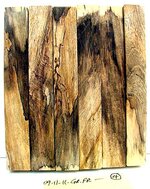
When I rough turn my green blank I leave the walls about 3/4 - 1 inch thick and then collect all the green shavings and pack that, together with the rough turned piece, into a cardboard box and seal it up. Our climate is fairly dry so it takes about 6 - 9 months to dry out. Because the timber is not exposed directly to the atmosphere the drying process is considerably slower, and the moisture maintained around the piece is sufficient to create to spalting effect. I have even achieved spalting in timbers that normally would not spalt.
FYI .
.
Regards Bob.
Because I am new to this forum, and also to woodturning, I am unsure if this subject has been talked about at length.
I have read in magazine where people have asked about how to promote spalting in timber. There has been lots of ideas expressed about achieving the desired result, but I have not seen the method that I use discussed anywhere, not that it hasn't. So, if you already know about this then please tell me to do something??.
When I rough turn my green blank I leave the walls about 3/4 - 1 inch thick and then collect all the green shavings and pack that, together with the rough turned piece, into a cardboard box and seal it up. Our climate is fairly dry so it takes about 6 - 9 months to dry out. Because the timber is not exposed directly to the atmosphere the drying process is considerably slower, and the moisture maintained around the piece is sufficient to create to spalting effect. I have even achieved spalting in timbers that normally would not spalt.
FYI
.Regards Bob.