
Anyone Know What's Causing This

Signed-In Members Don't See This Ad

Ed Weingarden

Member
Joined
May 2, 2022
Messages
38
Location
06019
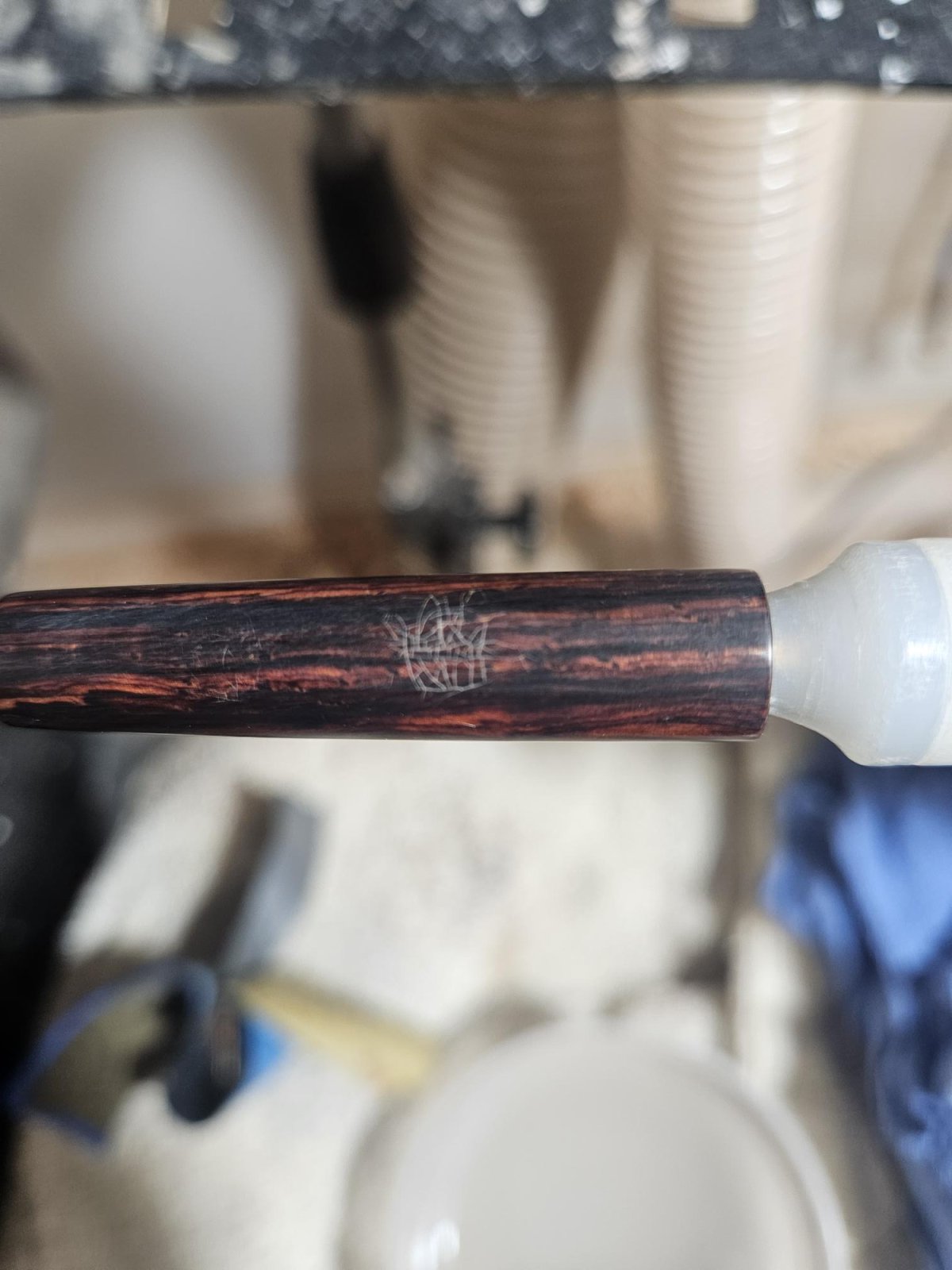
The wood is Cocobolo. I used GluBoost for the finish. I applied two coats Fill & Finish, then sanded it back to remove the ridges. Next was 5 coats of Thin. Accelerator used after each coat. I put the piece aside for 2 hours and then wet sanded up to 12,000 grit. This "thing" appeared and I have been unable to sand it out. Anyone know what's causing this. I've never seen it before. TIA.
20260521_173145.jpg
 
Signed-In Members Don't See This Ad
You said you sanded it? Can you run your fingernail over it and oes it have ridges. If so then you have to either tun it down further or sand with courser paper and work your way up again. A skew works well when turning woods.
 
@jttheclockman - whatever that thing is, it was not there when I finished dry sanding; I look very closely at my pieces before applying finish to make sure there are no visible scratches. It was not there after applying the GluBoost. It only appeared after I had finished wet sanding. If I run my fingernail over it, the wood is smooth. I don't know if there's something about the wood (I haven't used Cocobolo before), but I think I'm going to abandon the blanks and start anew.
 
That does not look like sanding marks because there doesn't appear to be a pattern. It really doesn't look like CA "bloom" either. Is there another spot to the left of the main area? What kind of surface did you set the blank aside on? Could it have picked up something from a paper towel or linen towel?

In either event, you should be able to gently sand back to wood re-apply your finish to remove it.

If you're not going to use the blank for a pen then I would absolutely sand back and re-apply for a learning experience to see if it shows up again. You can mark the inside of the tube with a sharpie to help you know where to look.
 
@jttheclockman - whatever that thing is, it was not there when I finished dry sanding; I look very closely at my pieces before applying finish to make sure there are no visible scratches. It was not there after applying the GluBoost. It only appeared after I had finished wet sanding. If I run my fingernail over it, the wood is smooth. I don't know if there's something about the wood (I haven't used Cocobolo before), but I think I'm going to abandon the blanks and start anew.
Well if you are going to abandon the blank then by all means do a little investigating. If you can not feel any ridges on it, I would still hit it with sand paper and or a skew. Looks like the beginnings of another mark just to the left of the one you show. Prep it as if you were going to use it.
 
Cocobolo is a member of the rosewood family, Dalbergia retusa. Typically the Dalbergias are oily woods, this could be a result of oil within the wood rising to the surface beneath the finish causing it to pucker/wrinkle.

I have used CA (probably StarBond, might have been one of the other brands) on rosewoods but always wipe the surface with acetone and let it off-gas before putting the first coat of CA onto the barrel. I've never tried GluBoost on a rosewood.
 
My method—acetone wipe—is similar to Duncan's. I have used GluBoost on Cocobolo and haven't had this particular problem happen.
Either sand it or turn it back to the bare wood, then use an acetone wipe before finishing again.
I haven't used the accelerator.
 
As said by @duncsuss, this type of wood does require a good solvent wipe before any finishing - I also use acetone for that. Contamination from the wood could be the cause, and as also previously said, maybe from the accelerator. Kind of a 'toss up' - another scientific term, lol.

However, my bigger issue and question is why so much GluBoost? You are at 7 coats - something you might do with normal CA, but I think WAY too much for GluBoost. One or two coats of thin and then same of the thicker should be plenty. The advantage of GluBoost over normal CA is it lays down better and does not require so many coats, offsetting the higher cost of the GluBoost. The crackling could be simply caused by applying to much finish.

Also, if you are getting ridges in the finish as you apply it, requiring you to sand it back, you need to rethink your application method. I might suggest trying some white craft foam cut into small squares to use as the applicator, vs what you are using. The finish should lay down smooth with each coat of finish, and not require sanding it back, which might also be the reason why you think you need so many coats - as you've sanded it off.

Kevin
 
Back
Top Bottom