Best chisel for roughing pens?

Signed-In Members Don't See This Ad
Joined
Nov 26, 2025
Messages
13
Location
RI, USA
I did a search, but nothing came up on this, so forgive me if it's already been asked somewhere. I'm just getting started with turning - I've only turned three pens so far, and I'm happy with the early results. So far I've just done wood blanks, but I am looking forward to trying plastics once I'm more comfortable with the tools (and my skills). Right now, all I have is the set of 3 Benjamin's Best HSS Pen Turning chisels that came with the PSI starter kit. I've been using the 3/8" spindle gouge for rough turning the square blanks down to the general shape, then finishing the shaping with the 1/2" skew. At some point in the not too distant future I'd like to start upgrading the chisels, but before I do (and I know this can be very subjective and unique by in), I'd like some opinions on what you more experienced guys are using for roughing and finishing, for other wood and plastics. A good friend of mine has been turning for several years now, and he swears by roughing with a skew and finishing with a 2" radius square, so I'm sure there's no single correct answer. I'd also like to diversify into other small turning (bottle stoppers are next on my list), so hopefully my upgrades will be appropriate for those kinds of projects as well. Thanks in advance!
 
Signed-In Members Don't See This Ad
I mostly use carbide and generally switch to the skew for the final few cuts. That being said, I have turned complete pens with nothing but a skew and I have turned complete pens with nothing but a roughing gouge. Your use of the spindle gouge for rounding them out is certainly a great way to do it. A roughing gouge is good to keep around, though. Your best bet is to just throw some blanks on the lathe and play around to see what feels best to you. You can use cheap wood and don't even have to drill and tube it to just get a feel for the chisels. Chances are that you're going to change up from your original routine a few times as you progress anyway. Ultimately, the skew is the one to master for just about anything. No matter what you use, keep them sharp!

Plastics are a different story. Some are quite finicky. A lot of resin blanks are Alumilite, which turns very smoothly. The hybrids can be tougher, even though most are cast with Alumilite, just because of the mixed materials. The acrylic blanks are where things get a little tougher. They crack and chip easily, but they take a better polish than Urethane resins (like Alumilite). The best way to get used to those is with the rhino plastic blanks. They're really inexpensive, so they make great practice blanks. Inlace Acrylester and Mica Pearl blanks are probably better to hold off on for a little while.

I hope that helps. It's good that you ask before spending a fortune on tools. For what it's worth, I started with the Benjamin's Best set of 8, which has been adequate for everything I need, but I am glad that I got some carbide chisels. I also have the set of 5 Benjamin's Best detail chisels, but they don't get used much. A big question is, are you going to turn more than just pens?
 
For rouging, vs. finishing cuts, on wood I use a spindle roughing gouge. I have two, one about 7/8" size and another 1-1/4" size. When properly sharpened, and used at a sheer angle, I've turned entire pens with nothing but these roughing gouges (the 7/8" in particular). Normally you present a roughing gouge strait in, however turned to an angle you can take very clean cuts across a pen blank, and it is a quick way to rough down the blank and smooth out the cylinder without ever changing tools.

Sometimes I'll rough with the roughing gouge, then switch to a 1/2" spindle gouge for the final work. This is often more true when I need a slight curve to my barrel rather than just a strait cylinder.

FWIW, I have been using a skew a lot these days. I have honed my spindle gouge usage pretty well, and I can get quite clean cuts, especially with very sharp tools that have honed edges (not the rough burr off the grinder.) However, if you want the smoothest cut surface possible, once you have the skill, the skew will usually still surpass the gouge. I still have a little trouble controlling a skew in some cases, notably at the ends of the blank when I'm turning down to the bushing. I don't know why, perhaps some unstable hands. In any case, skew gets you the smoothest wood surface you can attain, once you have the skill.

As I hone my skill with a skew, I find that I am often roughing my pen blanks down with them as well. There are various ways to use a skew to rough down a spindle. You can peel, which can be very fast but a bit rough, and it works well on some woods and not as well on others (harder woods may chip and shake). You can also run the skew across the blank and just take off layers of the wood until the blank is round. A roughing gouge is a lot easier to use, but, with the skew used this way, which can be a bit harder since you have to hold the skew at the same distance from the woold the full length of the stroke across the blank until it IS round, you basically run no risk of tearout or chipout, and the final result will be extremely clean and smooth.
 
I mostly use carbide and generally switch to the skew for the final few cuts. That being said, I have turned complete pens with nothing but a skew and I have turned complete pens with nothing but a roughing gouge. Your use of the spindle gouge for rounding them out is certainly a great way to do it. A roughing gouge is good to keep around, though. Your best bet is to just throw some blanks on the lathe and play around to see what feels best to you. You can use cheap wood and don't even have to drill and tube it to just get a feel for the chisels. Chances are that you're going to change up from your original routine a few times as you progress anyway. Ultimately, the skew is the one to master for just about anything. No matter what you use, keep them sharp!

Plastics are a different story. Some are quite finicky. A lot of resin blanks are Alumilite, which turns very smoothly. The hybrids can be tougher, even though most are cast with Alumilite, just because of the mixed materials. The acrylic blanks are where things get a little tougher. They crack and chip easily, but they take a better polish than Urethane resins (like Alumilite). The best way to get used to those is with the rhino plastic blanks. They're really inexpensive, so they make great practice blanks. Inlace Acrylester and Mica Pearl blanks are probably better to hold off on for a little while.

I hope that helps. It's good that you ask before spending a fortune on tools. For what it's worth, I started with the Benjamin's Best set of 8, which has been adequate for everything I need, but I am glad that I got some carbide chisels. I also have the set of 5 Benjamin's Best detail chisels, but they don't get used much. A big question is, are you going to turn more than just pens?
Both replies here are very helpful, especially the details about plastics - thank you! I'll probably be sticking with woods for a while, as there are plenty of them to keep things interesting. And then I'll have to put myself in the right frame of mind for the eventuality of wasting a lot of materials before I get plastics right. As for playing with different tools and routines, I have a mountain of scrap, much of it 3/4" thick pine, so cutting up blanks for testing would be a breeze. It'd be good practice for drilling, too - I got 40 pre-cut and drilled blanks in the starter pack to get spoiled on.

To answer your question, yes I do plan on turning other types of projects. In fact I've got a bottle stopper starter kit on the way, in case I get bored with pens. I've seen several other kits I'd like to try as well, but bottle stoppers are first on the list once I'm comfortable with a few different types of pens.
 
Ed; Pens are almost all spindles. The grain runs from head stock to tail stock. Bowls & platters are mostly cross / side grain. The grain runs across the axis of the lathe.

For both wood and synthetics, there is a WIDE range of hardness from soft as balsa to hard as ironwood. Same with synthetics, some are soft and easy, some are hard as nails, some are "chippy".

Look for a local wood turning club. AAW has chapters all over. Nothing beats standing beside someone and watching them, then taking the tool in hand. https://www.woodturner.org/Woodturner/AAWConnects/AAW-Connects.aspx
 
If you are going to stay with wood for a while, I might suggest the Robert Sorbey Spindlemaster. It is sort of a hybrid between skew and gouge - presenting a flat curved edge to the wood surface. This was my sole beginning tool for almost two years when I first started penmaking and it is still an occasional go to for me. I use it for all my beginner pen turning classes when someone is having issues with a classic tool.

I don't find this to be a super good choice for resin, choosing instead carbide insert tools, but if you keep it sharp, it will serve for either wood or resin.
Sorbey SpindleMaster

Keep your speeds high when using this - and use a less aggressive amount of pressure and you might find it useful!

Kevin
 
I am self taught a NOT the best at that! I grew up with the necessity of using grinders for and learning how to sharpen different tools. With that background, when I got into turning and with pens, I used HSS tools. To this day, I prefer HSS and can sharpen them to my needs and a tad bit sharper than I find with the best Carbide Insert tools.

That said, for me I have learned to use carbide insert tools for roughing small bowls and pen blanks to near size and then use the very sharp HSS to bring to size and finish turning. With experience and a very sharp HSS scraper or skew, it is possible to turn blanks so smooth that sandpaper is not needed in many cases.

It all comes down to your experience and what serves you best in your situation.
 
Wood is no problem but synthetics, to use a generic term, is another story. I spent a load of time with various tools to turn a couple of synthetic blanks; spindle roughing gouge, spindle gouge, bowl gouge and skew. Not a good experience. I feel that I can "rough" to round and use a square end scraper for the final touches. More time to experiment.
 
I am self taught a NOT the best at that! I grew up with the necessity of using grinders for and learning how to sharpen different tools. With that background, when I got into turning and with pens, I used HSS tools. To this day, I prefer HSS and can sharpen them to my needs and a tad bit sharper than I find with the best Carbide Insert tools.

That said, for me I have learned to use carbide insert tools for roughing small bowls and pen blanks to near size and then use the very sharp HSS to bring to size and finish turning. With experience and a very sharp HSS scraper or skew, it is possible to turn blanks so smooth that sandpaper is not needed in many cases.

It all comes down to your experience and what serves you best in your situation.
Self taught as well. Agree on HSS tools - sharpened well, they can deliver silky smooth finishes - and with quality steel, they can last a while between sharpening's. I'll add one thing to sharpening that I learned in a class with Eric Lofstrom - use a hone after sharpening on a wheel. Tool goes from sharp to SCARY sharp when done right. Eric has a few videos on YouTube about suggested methods, making the few extra minutes worth the time. I believe the edge is more important than tool shape.

Kevin
 
Self taught as well. Agree on HSS tools - sharpened well, they can deliver silky smooth finishes - and with quality steel, they can last a while between sharpening's. I'll add one thing to sharpening that I learned in a class with Eric Lofstrom - use a hone after sharpening on a wheel. Tool goes from sharp to SCARY sharp when done right. Eric has a few videos on YouTube about suggested methods, making the few extra minutes worth the time. I believe the edge is more important than tool shape.

Kevin
^ THAT makes a BiG difference!

One other thing: Speed - RPM. 2500 - 3000 for cutting (but not for sanding). 2500rpm on a 1/2" wood diameter blank is a slower cutting speed than 600rpm on a 10" bowl and subject to rougher cuts on medium to soft woods. Also, scrapers do terrible on soft woods but great on hard woods. In general skews are the opposite, so I have read from a highly regarded old turner.
 
You basically turn most projects with just about any tool that sharp and you have the knowledge how to use it. Also how to present it to the project being turned. But with that said they make different style and shapes of cutter heads for a reason. I suggest getting a turning book or doing some video watching on the net. There are many turners demonstarting their use of different tools and the proper ways to use them. For us to tell you what is best is just not possible. We all learned different methods. I have for years here promoted the use of the skew as a final tool for many projects because of the shaprness and it versatility. But it does require abit of a learning curve.

So to basically answer your question directly I will tell you what I have grown to love to use. I rough with a round carbide cutter using the Easy Wood tools and then finish all pens with all materials with a good sharp skew. My sanding is practilly nil when done and can go right into finishing. Good luck.
 
Self taught as well. Agree on HSS tools - sharpened well, they can deliver silky smooth finishes - and with quality steel, they can last a while between sharpening's. I'll add one thing to sharpening that I learned in a class with Eric Lofstrom - use a hone after sharpening on a wheel. Tool goes from sharp to SCARY sharp when done right. Eric has a few videos on YouTube about suggested methods, making the few extra minutes worth the time. I believe the edge is more important than tool shape.

Kevin
FWIW, not all steel is equivalent. There is your average HSS, which is usually M2. This is ok, but it often does not hold an edge terribly well. There are better forms of steel, such as M42 or 10V, as well as forms of Cryo steel, which hold a very sharp edge a lot longer, don't require taking off as much steel each time you sharpen and hone, etc. I have been mostly using M42 and some 10V tools, with a particular 600 grit CBN wheel, and the sharpness is exceptional and tools remain sharp for much longer than my M2 "HSS" tools.

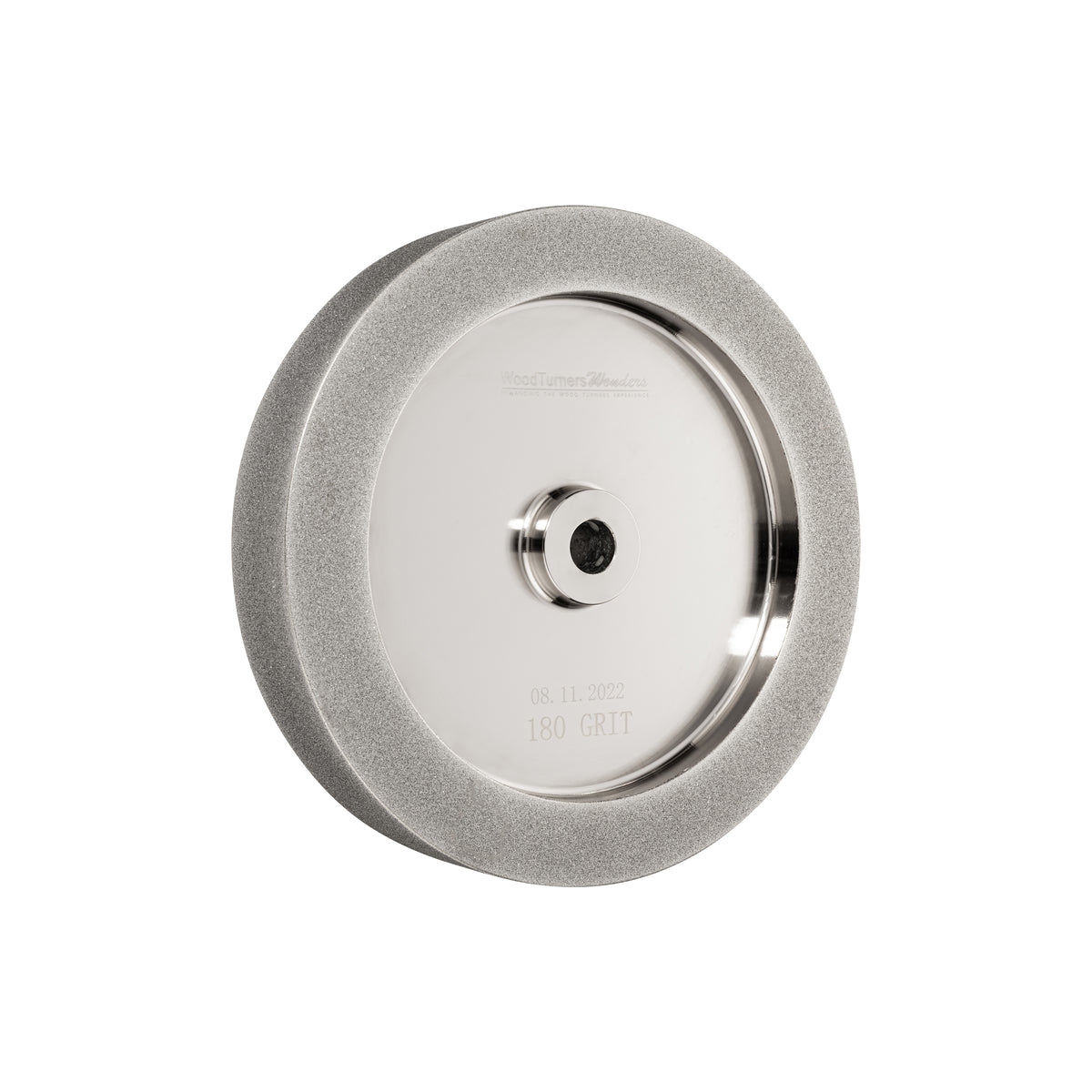
A good sharpening wheel is also key. I had two CBN wheels, which I purchased strait out the gate when I started turning back in 2020. I bought a Rikon low speed grinder, and promptly replaced the aluminum oxide wheels with CBN wheels. However a friend sent me an older 600 grit "wide" CBN wheel earlier in the year when he replaced his. I was at first thinking I would just use it to refine the sharpening my 350 grit wheel did, however this CBN wheel was FAR superior to any of the wheels I had purchased myself, despite being a much higher grit. I've been learning that not all CBN wheels are made the same, and this one in particular (which I think comes from Woodturning Wonders) allows me to resharpen the edge of almost all of my tools in a matter of seconds. I will flip the wheel on as I set up my gouge in the jig, then literally spend about 10-15 seconds putting an edge back on before flipping the grinder off again and going back to turning (or honing, definitely more with the skews than gouges, but honing really does help produce a cleaner cutting edge.)

So if you are looking to step up your turning game, look into some good quality CBN wheels. I'll see if I can find and link the one I have (which I'll probably need to buy another one soon enough here, as the one from my friend is a bit older, and some parts are showing wear now.)
 
CBN wheels do not fill with swarf, so they tend to work better that the same grit on an oxide wheel. I have an 80 grit oxide wheel. It and my 180 CBN wheel work much the same. Same for my 180 oxide and 320 CBN. I've thought about a 600 grit CBN wheel.
 
CBN wheels do not fill with swarf, so they tend to work better that the same grit on an oxide wheel. I have an 80 grit oxide wheel. It and my 180 CBN wheel work much the same. Same for my 180 oxide and 320 CBN. I've thought about a 600 grit CBN wheel.

FWIW, swapping out my 350 for the 600 was the best thing I've done. And its an old 600 that's been used for a few years as well. Still it is the best CBN wheel I've ever used.

I believe this is the wheel:


My original wheels were narrower...I really like the wider 1.5" thickness wheel. Especially for freehand sharpening of scrapers and skews, it has been so very nice. Well worth the price, IMO (although, its not that much more expensive, I think I spent $159 each on my previous two wheels, which are not as good.)
 
I'm guessing by now that you get the idea that sharpening is important❗ 😁 ;)
I also will agree with a couple others that said you can skip sanding if you have a sharp skew and a steady hand.
 
Back
Top Bottom